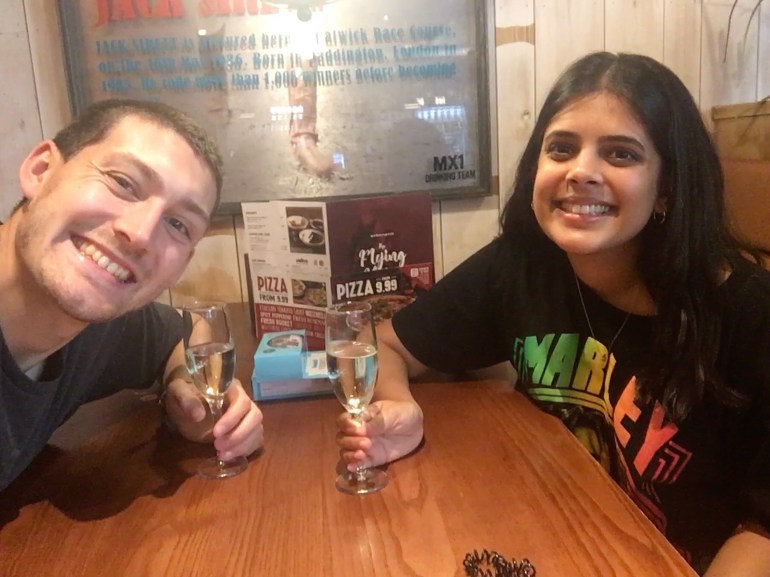
The grand return! With a glass of prosecco in hand, we sat in the same bar in Gatwick airport as our first run and reflected on what we were most looking forward to on our second leg. Some of the old hopefuls kept true with the Amazon and Columbia, and we added a few more to the repertoire too. Of course the new addition of the Galapagos made the cut, along with hiking in Peru and making it to Bolivia.
2 stopovers and a Cinnabon later we landed in Sucre, our first stop in Bolivia. We had already celebrated how cheap the airport in Santa Cruz was, found our first superb delicacy Subway of the trip (although no Subways were consumed in the writing of this blog) and felt the warm Bolivian air on our skins. As the taxi navigated down the hill towards our home for the next few weeks, spirits were high.
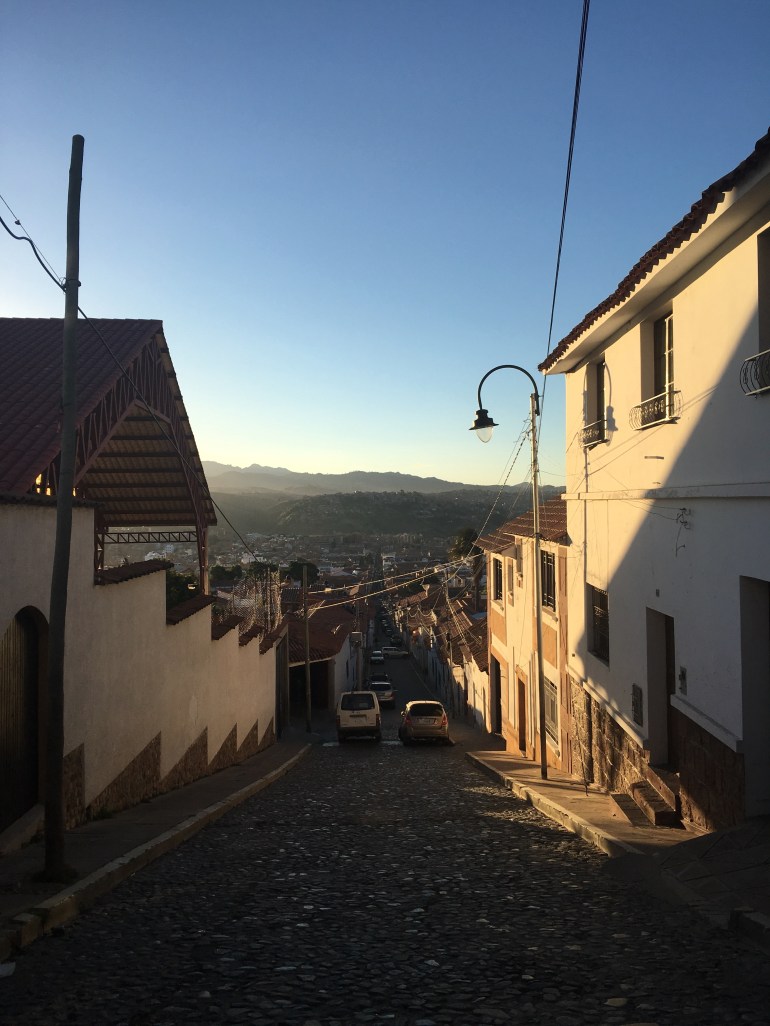 The view from the mirador in Sucre, beautiful cobbled stress and hills surrounding the city
Our first stop was the Spanish school Joel has recommended all those months ago. With a slight incline up the hill from our hostel, this was our first experience of the altitude of Bolivia (Sucre sits at 2,800m). Both looking at each other slightly gasping, we made it to school and signed up for at least a week. As with most towns in South America, Sucre had a great square where we wiled away the rest of the day with an ice cream in hand.
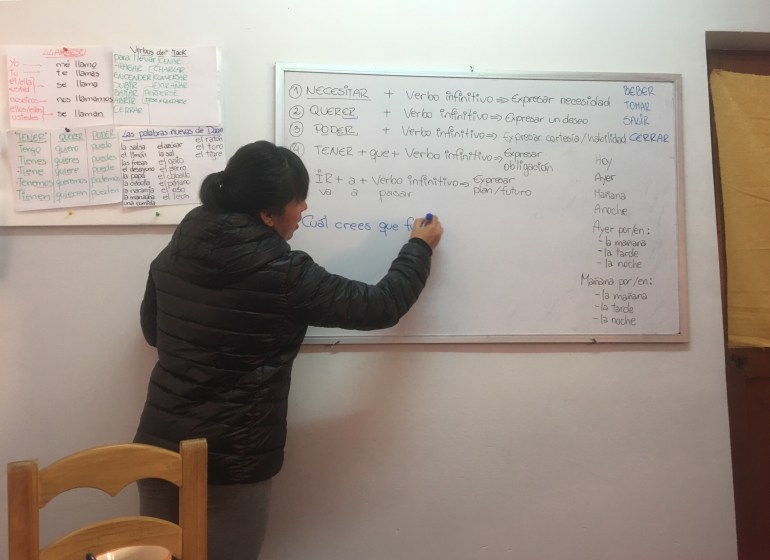
The next day started our first 4-hour lesson and with a great discrepancy between Cal and Rosh’s level of Spanish, it promised to be an interesting affair. Our teacher, Carol, soon figured out there was a difference and tailored her approach accordingly. This was the start of a 2-week Spanish learning love affair, with 4 hours every weekday morning and a lot of coffee needed in between.
We headed down for lunch on our first afternoon to the local watering hole, a vegetarian cafe fondly known as Condor which had 3 course lunch deals for £2.50. Just as we were tucking into the veggie meatballs, Kanika from Rio wandered through the door! We hadn’t mentioned we were back yet as we were just settling into the traveller lifestyle and she had no reason to expect us to be sitting there. After an emotional reunion, we agreed to meet for drinks the weekend coming and have a proper catch up.
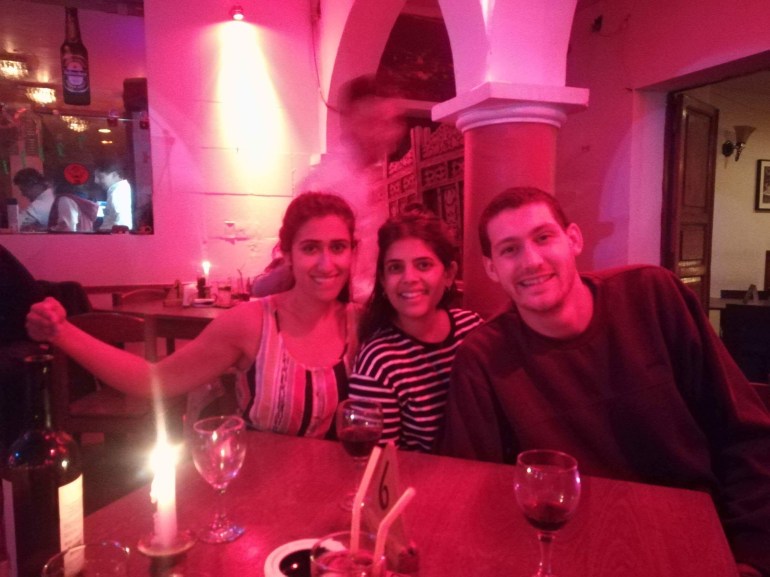 Kanika was the last person we saw in Rio and helped us throw all our stuff into bags, so this was a great surprise for all of us!
After a few days of jet lag and settling in, Sucre began to feel very familiar. It was definitely the place you planned on staying for a couple days and ended up staying weeks later. Regular visits to the central market which was the bustling centre of the city, to small cafes to get in an afternoon of Spanish homework and near daily visits to Condor where the owner knew us all made for a comfortable beginnings.
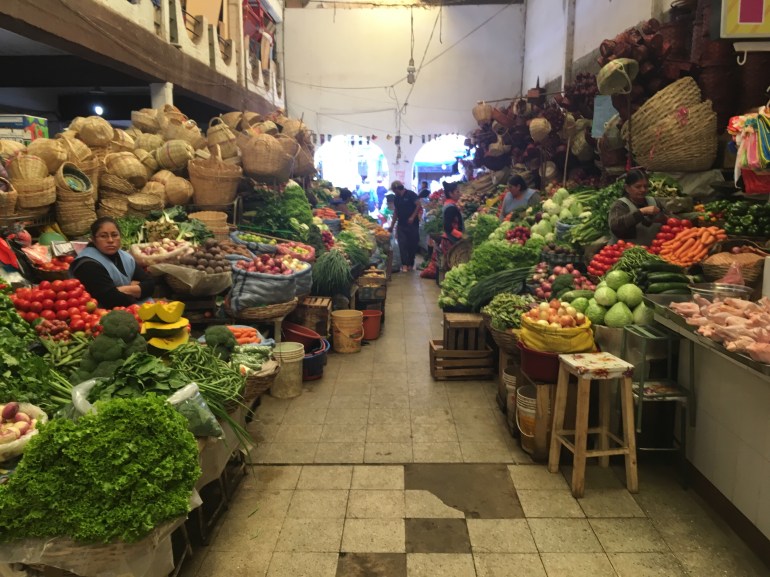
 We headed to the market to try all the new fruit we had never had before. A perfect accompaniment to Spanish homework! Favourites included turbo (sour passionfruit-esque) and the creamy goodness of chirimoya
Between our hostel and Spanish school we had met a great group of people, mainly made up of the European Union with a few Aussies for good measure. These included ex-Olympic figure skater Kim from France (yes, really, YouTube Mario Kim figure skater), Jimmy from Manchester, less famous unless you were a regular at a Glasgow pub, a German duo, Tim and Jana, more competitive than the national football team but awesome fun and Kanika who we met in Brazil, desperate to learn Spanish, but mainly to understand the lyrics to her favourite Latin tunes. Our Sucre squad was as good as they come.
Sucre over the next couple of weeks became a mix of dinners all over the town, nights out at Kultur Berlin (and mornings trying to place those nights, or trying to place Jimmy who we lost for 2 whole days until he opened the door of his Airbnb after 45 minutes of banging to say ‘hey guys, was just off to buy some bananas, what are you doing here?’), and pitchers of beer while watching the champions league semis in Joyride. There was also the small matter of cramming in Spanish when there was a spare moment.
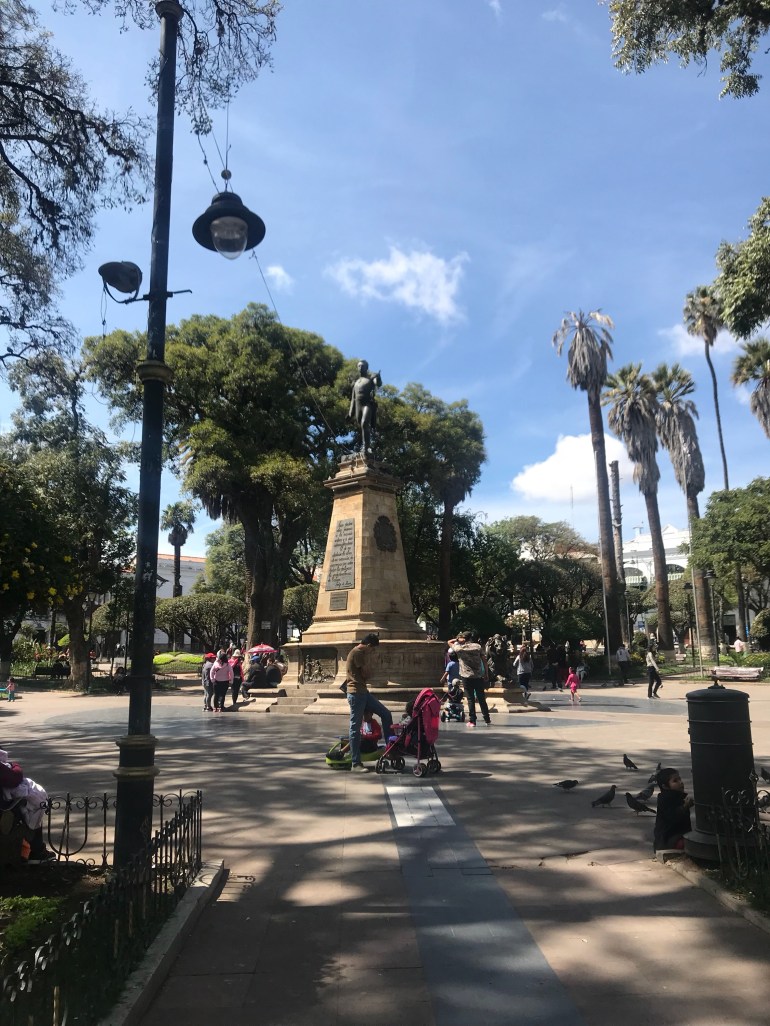
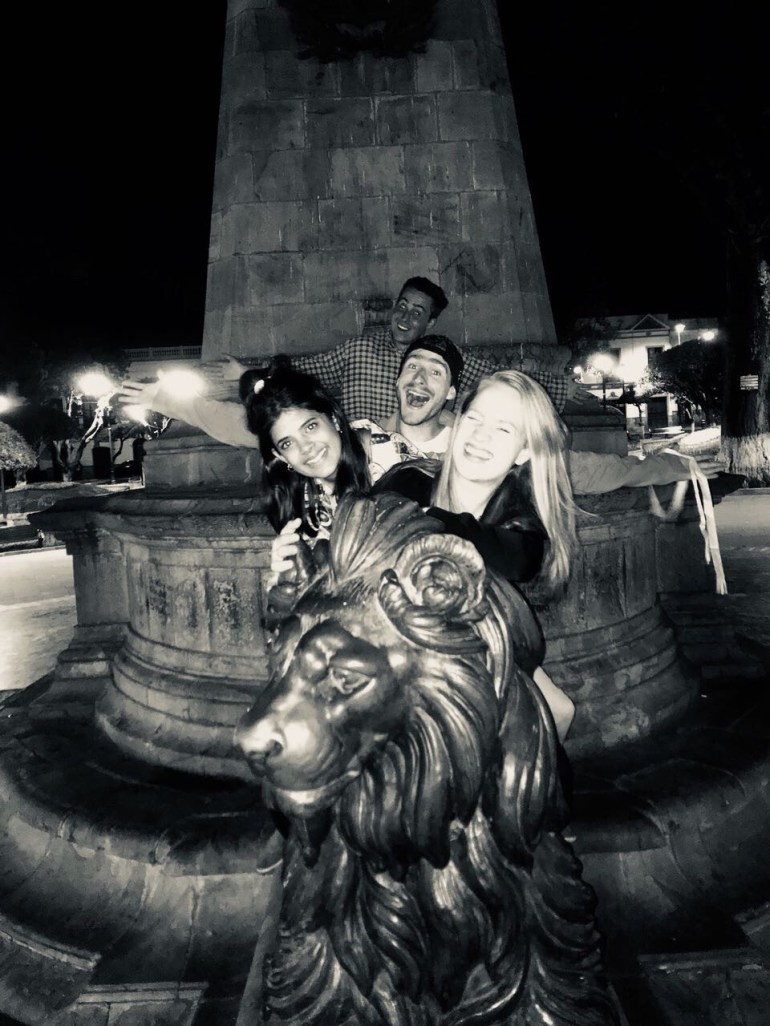 Trafalgar Square or Sucre Square?
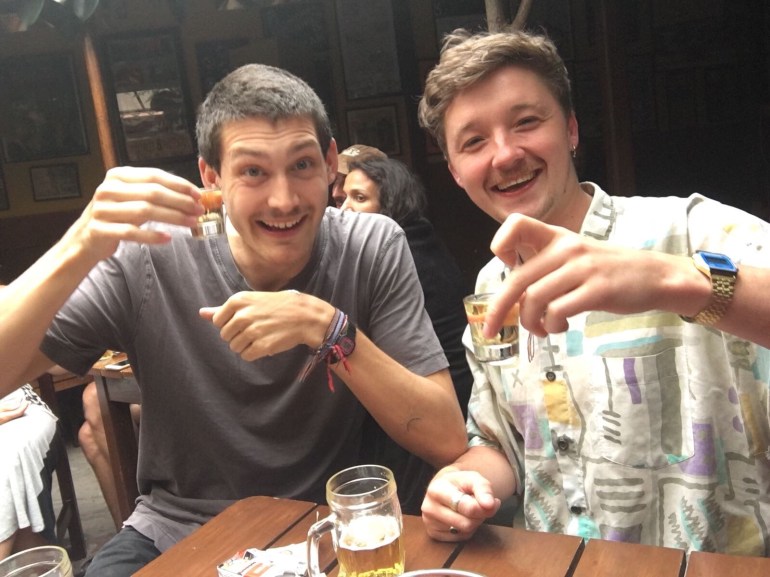 Tequila shots with Jimmy at 5pm after Liverpool made it through!
After watching the inspiration of our European teams, we even made it to watch the local team at Sucre’s stadium. Although there was much left to be desired after watching the match, the band and fans made the atmosphere one to remember for our first game (finally!) in South America.


A couple of visits to the main museums in Sucre, along with a convent with amazing views over the city also provided a background to understanding life in Bolivia. We spent one afternoon wandering around Casa de Libertad, amusing ourselves with how different Bolivar looks in each portrait. It was clear to see why the local population of Sucre is adamant to ensure tourists understand that Sucre is the legislative capital of the country and it sits alongside La Paz.
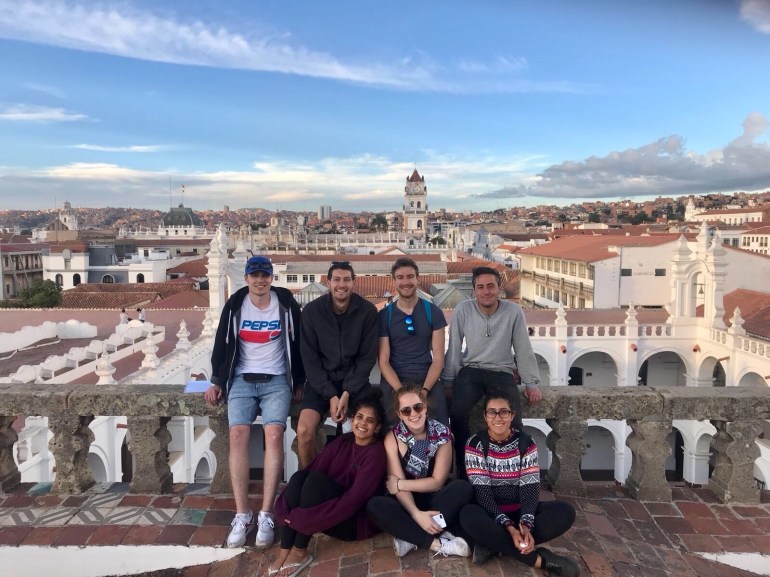 Incredible views of the historical white city centre of Sucre (also a UNESCO world heritage site) from the convent
Our next stop was the salt flats and along with a couple of Germans (Tim and Jana), Kanika and ourselves were keen to head off after 2 weeks of Spanish school. Little did we know that our convent visit wasn’t the only run in with the Lord we had..
Sucre under siege: On our penultimate day of Spanish school, we had heard news of a ruling meaning Santa Cruz, a populous industrial city in the lowlands, had won ownership rights to a disputed, newly discovered oil field between the 2 states. The consequences of this mean the state of Sucre is likely to diminish, economically and politically.
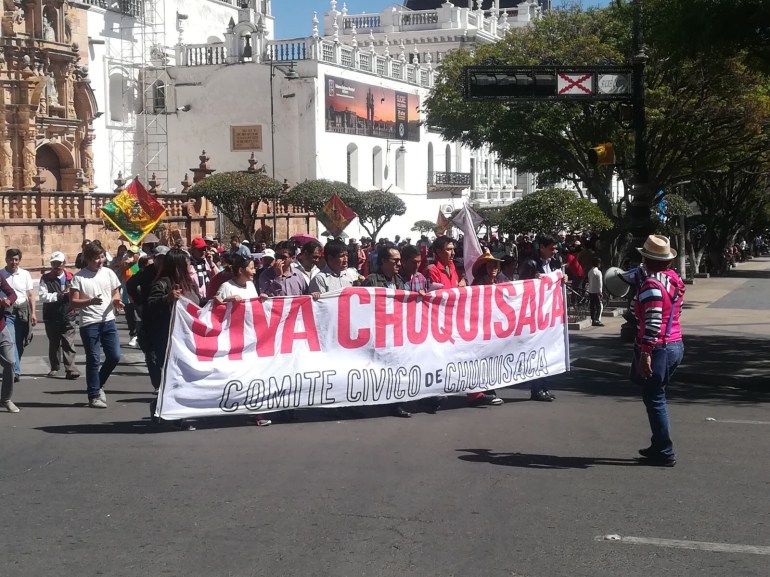
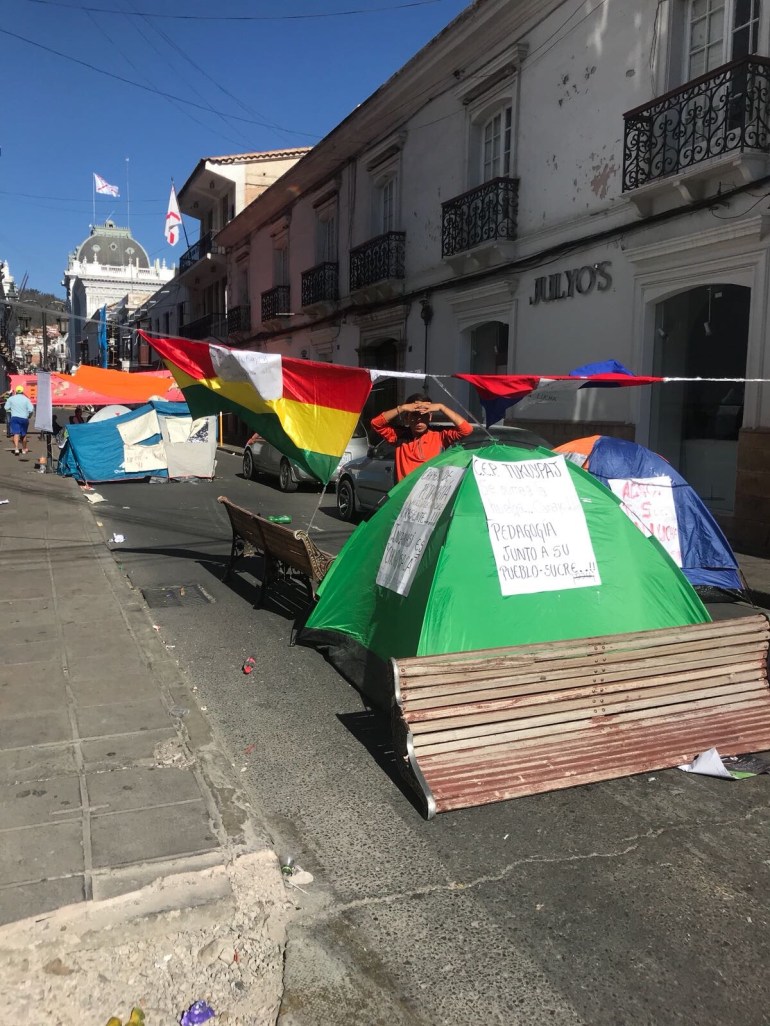 Protests in Sucre Square
The citizens of Sucre did not go quietly into the night. We had heard urban legends of Bolivia’s favourite pastime of breaking into strikes – perhaps we were slightly naive in our initial understanding of what this meant because the actions that ensued over the following days were far from anything we could’ve imagined.
At first, a series of blockades were erected within the city, this meant buses parked at every crossroad in town and many of the local shops closed. Oh how this escalated.
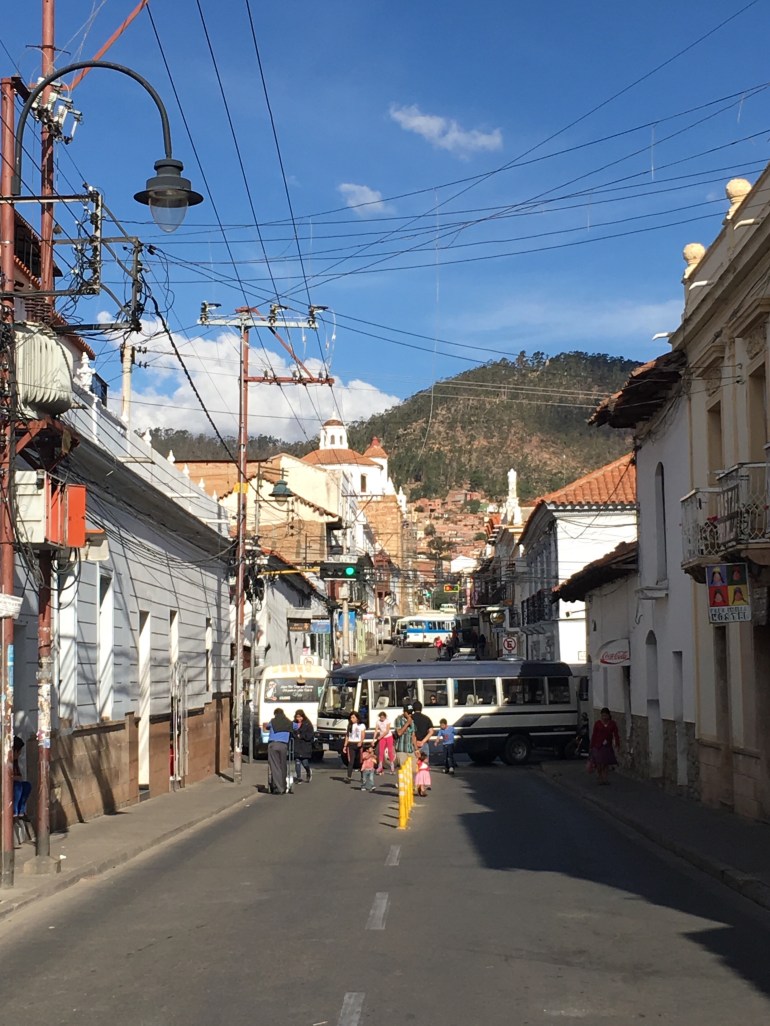
We wanted to get out, not being that partisan over an oil dispute and keen to resume travelling, however we had heard rumours that the blockades had spread to the outskirts of town. We began planning our great Sucre escape. Cue 3 dead of night attempts in taxis to get through the barricades around the city.
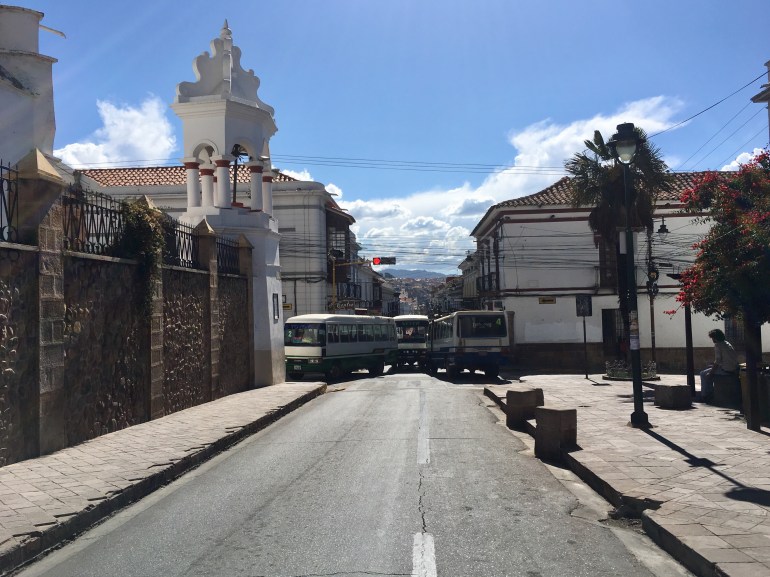
The first attempt was short lived. We planned a Friday night drive to nearby city Potosi – we knew we would meet a blockade en route but presumed we could walk through the protestors and fetch a taxi on the other side. We were wrong. This blockade was not buses parked across the road. This blockade featured 100 trucks squashed together and a rather menacing looking mob of protestors scaring away any taxis to meet us. Back to the drawing board.
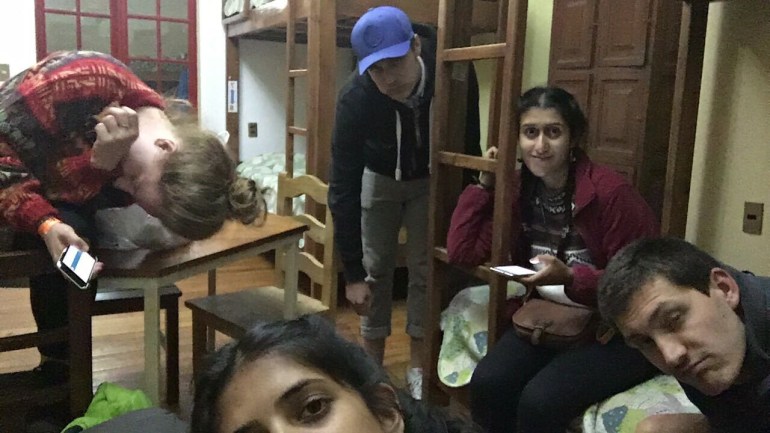 Spirits were low and the only place to check in to was Kultur Berlin. We weren’t there to party, but the sounds of Robbie Williams kept on going until 4am
The following day we booked a flight out of Sucre. Flights were running, flights would be a safe option – we just had to get to the airport.
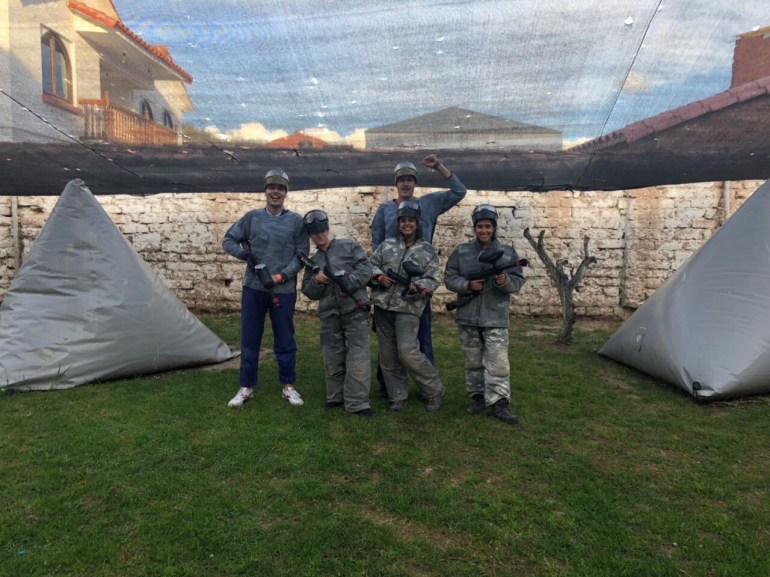 In an effort to pump ourselves up for escape round 2, we spent the afternoon paintballing at altitude – breathless and knackered, not sure this was the prep we envisaged
Saturday evening we set off for a flight leaving Sunday morning, knowing our best chance to get past the blockades was to go very late at night and sleep at the airport. The 2nd attempt out of Sucre didn’t work, we were met by a precarious looking blockade and left unconvinced by a nervous taxi driver, so we came back to Sucre, again.
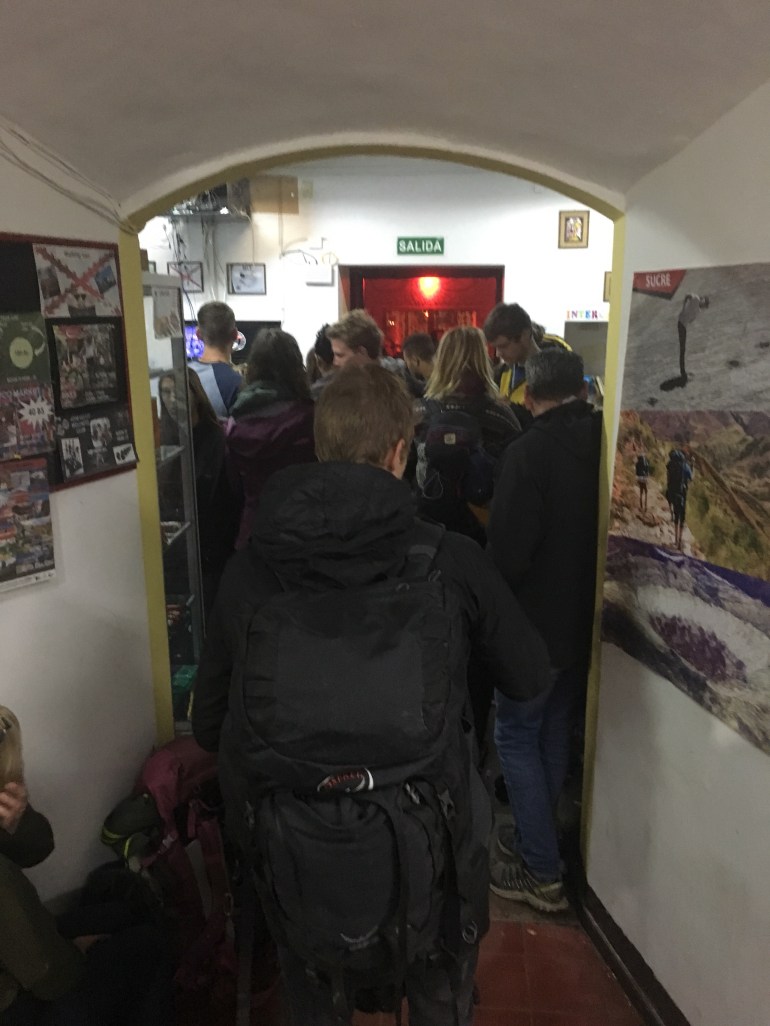 3.30am mass exodus of travellers trying to secure their freedom
However, we weren’t defeated. Our 3rd attempt was the same night, this time with a more confident taxi driver. We got to blockade, but we knew what to expect, we were confident, we were ready. We couldn’t cross in a taxi and so set off with the only option available to us – a 5km walk through the blockades at 4am to try and reach the airport. We were adopted by a Bolivian couple who helped us traverse a safe passage and we made it. We were jubilant. We were out.
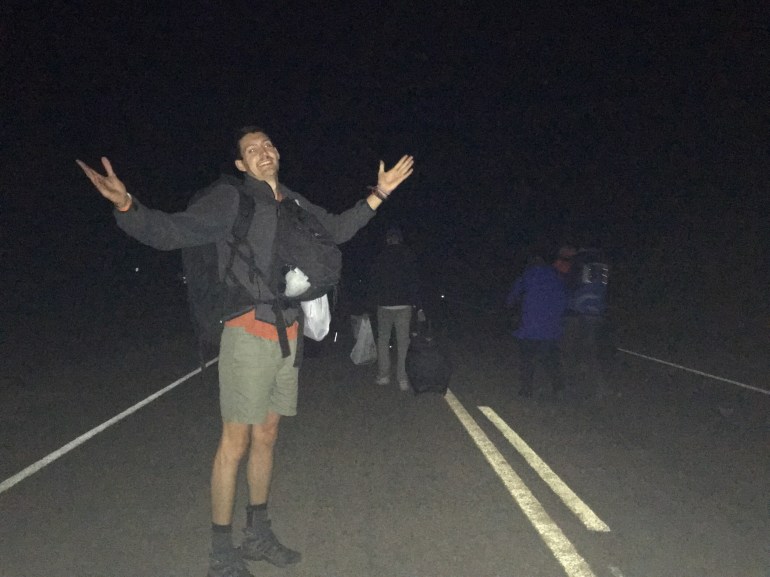
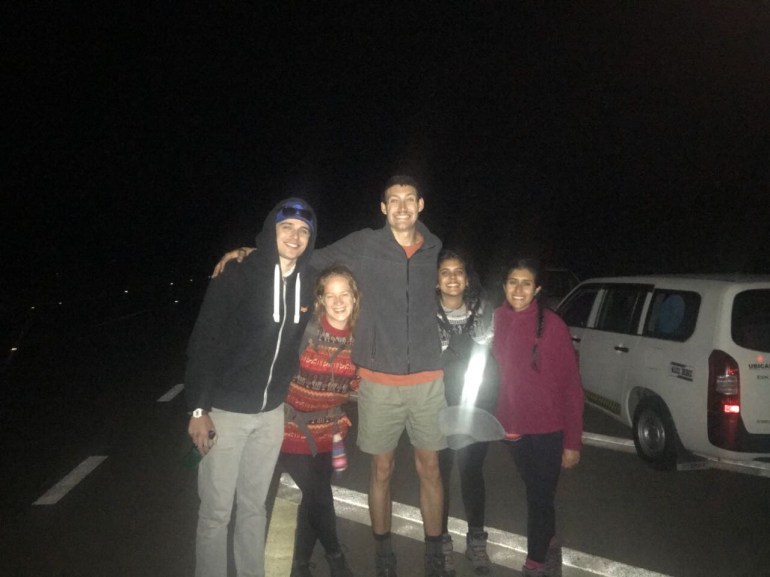
We were not out. 7am came around, an announcement rang over the tannoy, ‘the airport is closed, no flights will run for two days’. Jubilation became devastation. We were faced with a deserted airport and a bleak possibility of returning to a blockaded city. Luckily Eduardo, the man in the pizza shop, came to the rescue and offered a hostel close by.
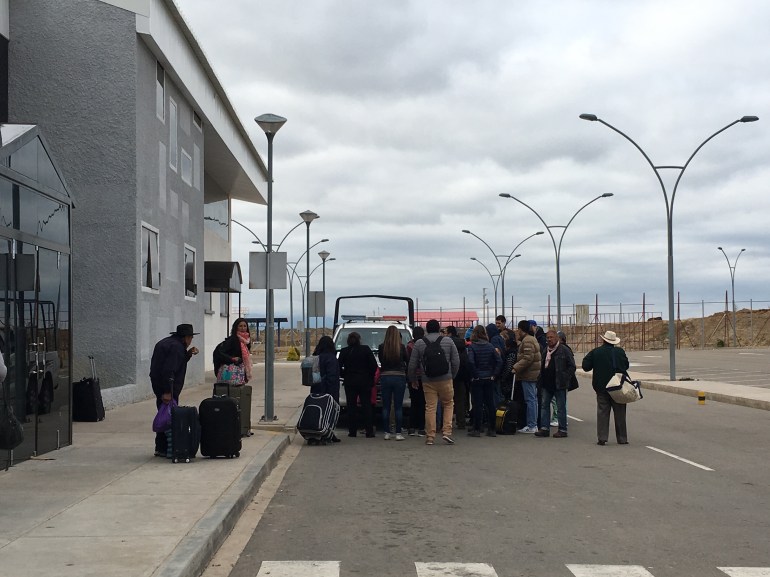 The police came to the airport but could not guarantee the safe passage of any one across the barricade and it felt like we were stuck
It became clear that the hostel was in fact more of a Christian camp and a place of refuge for 22 backpackers, a Bolivian family trying to get home and an ambulance crew unable to get through the blockades. There was next to no WiFi, tepid showers and food you would expect to get when all flavour and vegetables had vanished from the world. Nevertheless, we made it home for the following 3 nights, entertaining ourselves with walking our favourite llama, named Jimmy, Cal had a haircut spread out over two days (this needed two attempts from Tim) and games of football featuring Gringos FC vs Sucre Ambulance United.
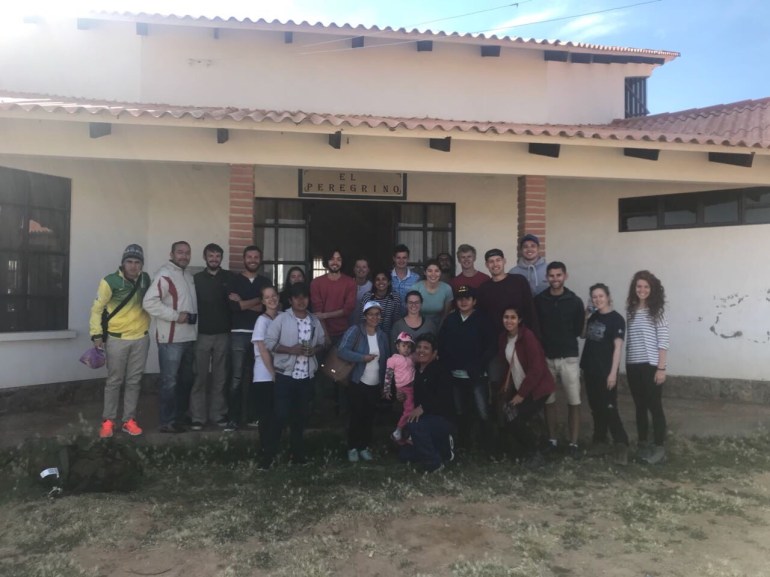
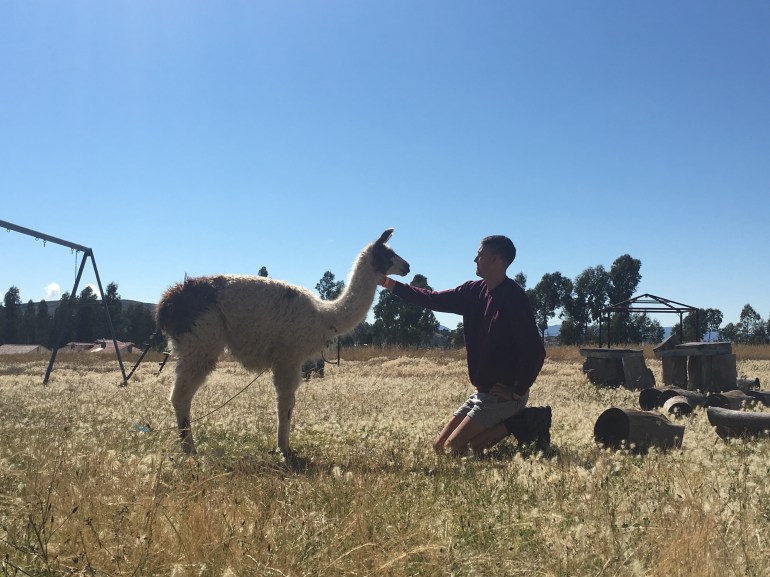
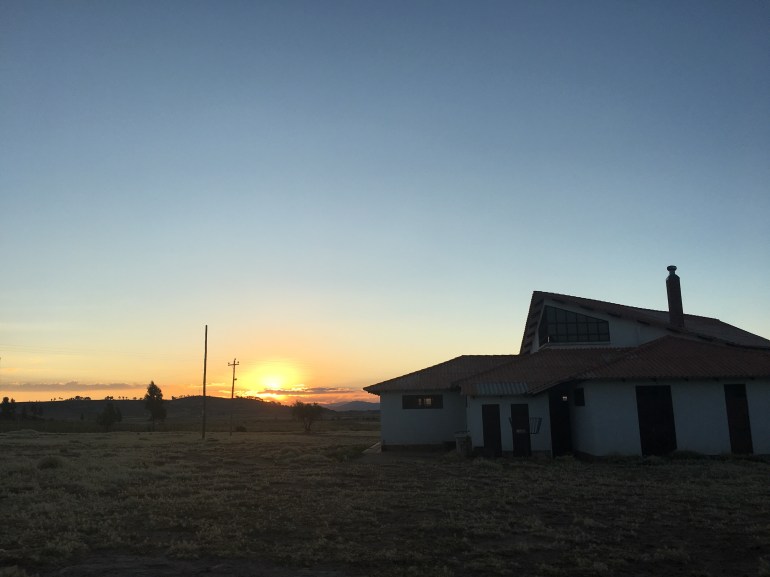
The morning of the 4th day brought news of a possible way out. We had 24 hours to get through the blockades which had supposedly been lifted, although the airport remained closed. Rumours swept throughout camp, the embassy was sending us an armoured vehicle, the army was using a military plane to get us, the police were escorting us through the blockade – sadly none were a reality, our fate was in the hands of our hosts. We were guided through the blockades on foot, 2km later and in the mid day heat, we found a taxi. Driving back into Sucre, we got to the bus terminal and in a tense, nail biting moment, bought the last tickets to Cochabamba.
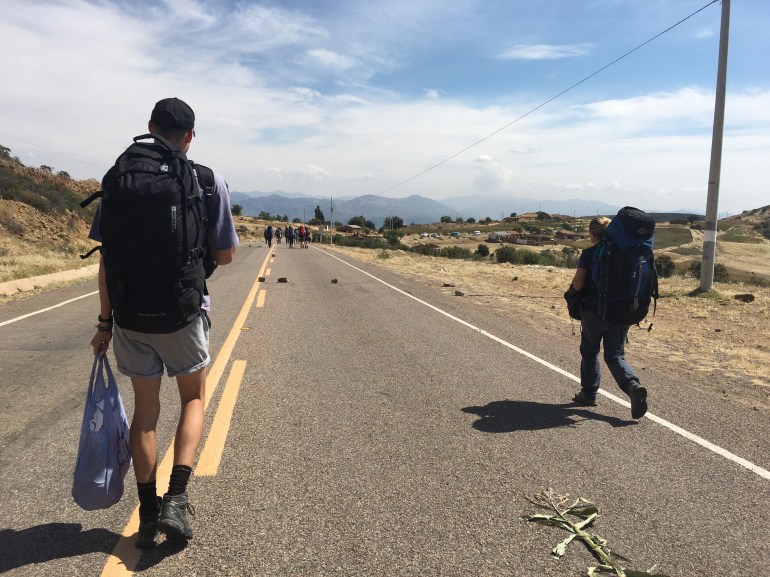
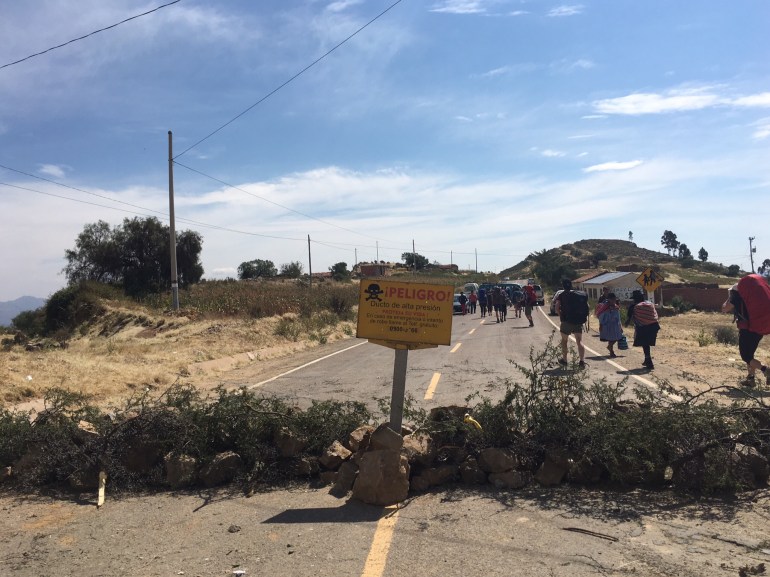
All was going well, the bus to Cochabamba was running smoothly and no blockades were in sight. Sadly this ended at the state line. We were at a complete standstill and fearful of being turned back. Other travellers braved the walk through the blockade, hoping for a taxi the other side.
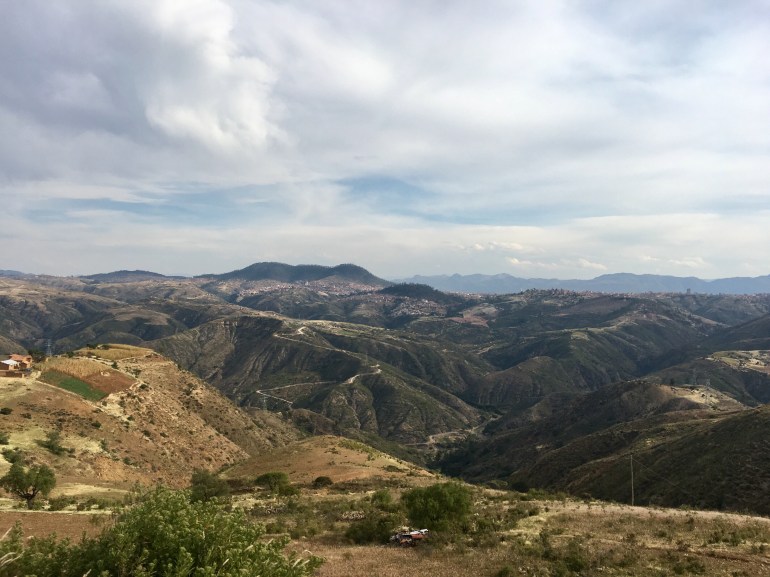
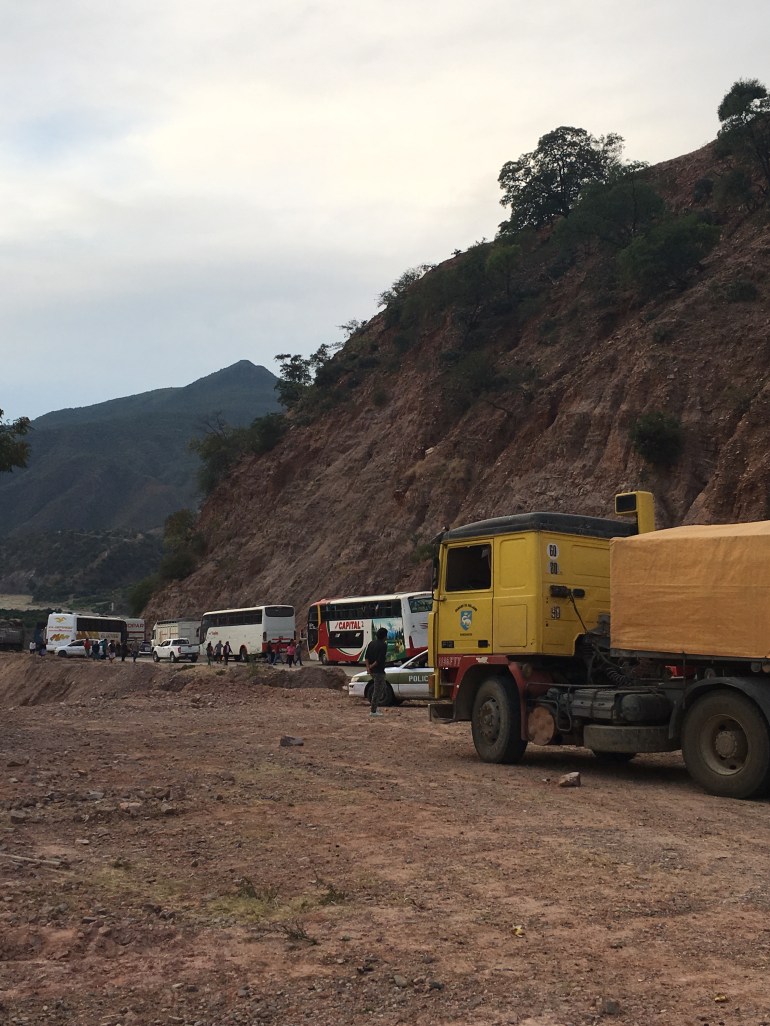
In the end we put Wonder-woman on an iPad for a large audience of Bolivians and foreigners, cracked open a few beers (we had run out of water by this point) and called it a night. We slept on the bus, with a view to get moving at sunrise if there had been no change. At 4.30am we woke to a screaming baby, and Kanika flashing her torch in our eyes and asking ‘Is the baby ok?’ It was clear that none of us were ok, and none of us were getting back to sleep, so we hauled our bags onto our backs and started walking 2km to the blockade.
On the approach, we realised just how many vehicles there were, and just how many protestors there were. As we walked to the line, we heard ‘volver volver’ (go back) from the protestors. Unclear whether this was a threat or a word of caution we asked whether it was possible to walk through, and were given the all clear. As we continued, we realised they were clearing the road of the trees and stones and were slowly allowing traffic through. Unsure whether our bus would continue given it was now empty, a few guys ran back in the hope they could pick us up on the road and carry on through to Cochabamba.
Waiting on the side of the road, in darkness except for the headlights of passing vehicles, we were trying to recognise our bus. Luckily for us, Jesus Christ was plastered on to the front and as he approached we all ran on expectedly. Rumours of further blockades or problems passed through the bus but we were finally on a clear road out of the state and into freedom. All 22 tourists, and our Bolivian family, made it out of Sucre that night.
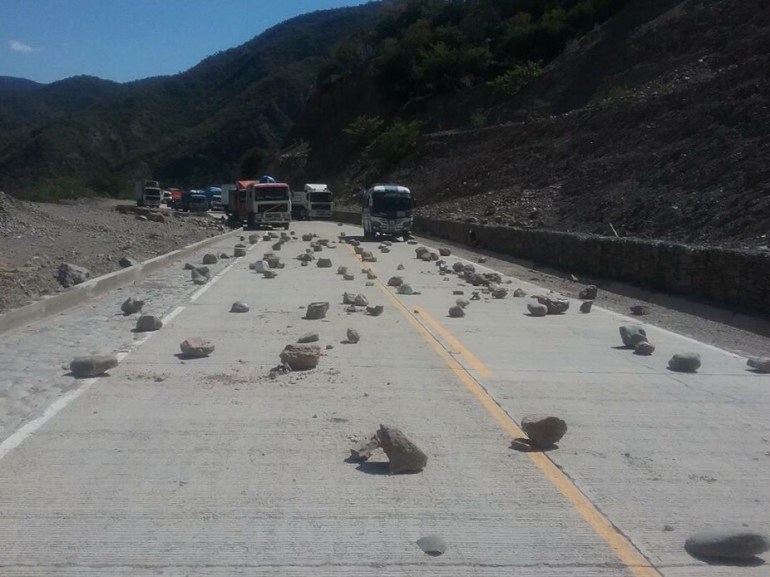
We have to give it to the Bolivians, they know how to hold a disruptive protest. Che is smiling.
Food find: After hearing horror stories of Bolivian cuisine as we travelled through Argentina and Chile , we were pleasantly surprised to land in a spicy pot of salsa. Known as llajua, it was fresh, it was fiery, and it was on every single lunch table we could have dreamed off. Bolivia has already taken taken the tasty food stakes with this little gem.
What we’re listening to: On our 3rd attempt out the city, Chameleon came on the radio as we were approaching the barricade. The line that stuck was ‘Every day is like survival.’ While it might seem a bit dramatic now, heading into a wall of angry protestors in the pitch black with all our worldly belongings was not something we’d choose everyday.
Love & hugs,
Cal & Rosh xxx
 The Los Vagans
Hi
What a start to your return to SA. Glad I didn’t know the half of it or I would have flown in with the ‘A’ team- sorry I mean a team – and god knows what would have happened!!
But now you have experienced that famous South American rebel streak and this was a placid one by the sounds of it.
So back to travelling and hopefully calmer waters – particularly at Titicaca.
LikeLike