The time had come. We set off from main land Ecuador, destined for lands that even the great David Attenborough would be giddy with excitement to visit. The Galápagos Islands were a source of many geography-filled dreams for Rosh, wishing for years to explore the archipelago which remains in a state of untouched wonder. We couldn’t wait to immerse ourselves in the trip of a lifetime.
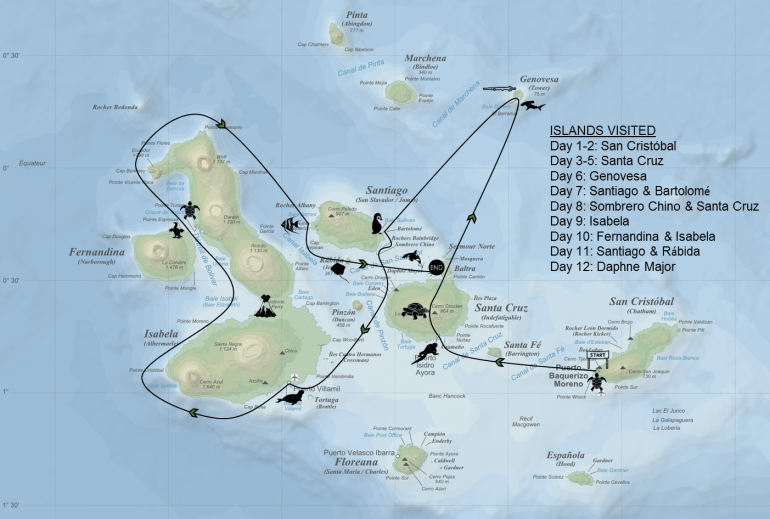
Volcanic Islands
As any avid geographer will tell you, volcanic islands have a range of characteristics that set them apart from your regular, basic islands – and even of all the trendy, alternative volcanic islands out there, the Galápagos archipelago are top of the lot. Born of molten lava bursting through the Pacific Ocean, forming lands which were then dragged across the Earth’s surface by tectonic movements – these islands are still forming and slowly sliding towards South America’s mainland. If that doesn’t get you hot under the collar (volcanic pun intended) then you need a refresh of GSCE Geography.
However, what we found shocking was that every island we visited, despite forming in the same way, looked completely different. We ventured from the habited to uninhabited, coming across every colour sand beaches, climbing mountains as well as trekking over cooling lava fields, and in awe at those still forming. As we said, these were some special islands!
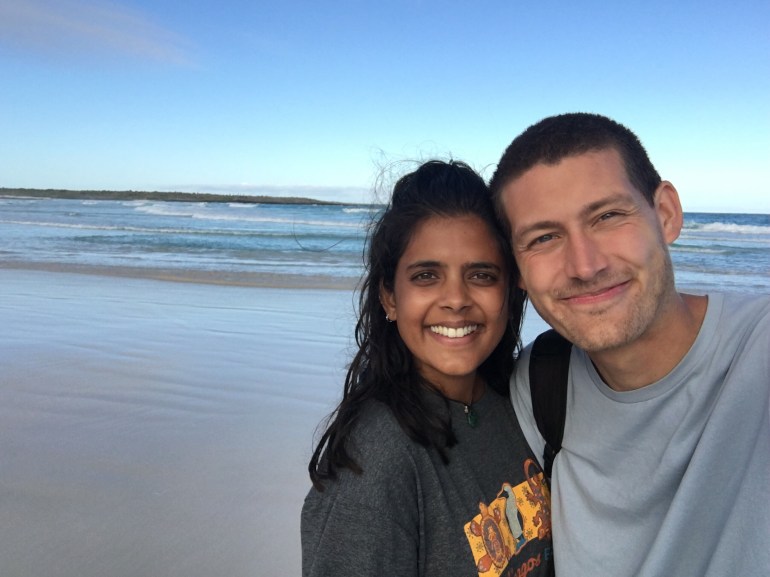 The beautiful sandy beach at Tortuga Bay on Santa Cruz
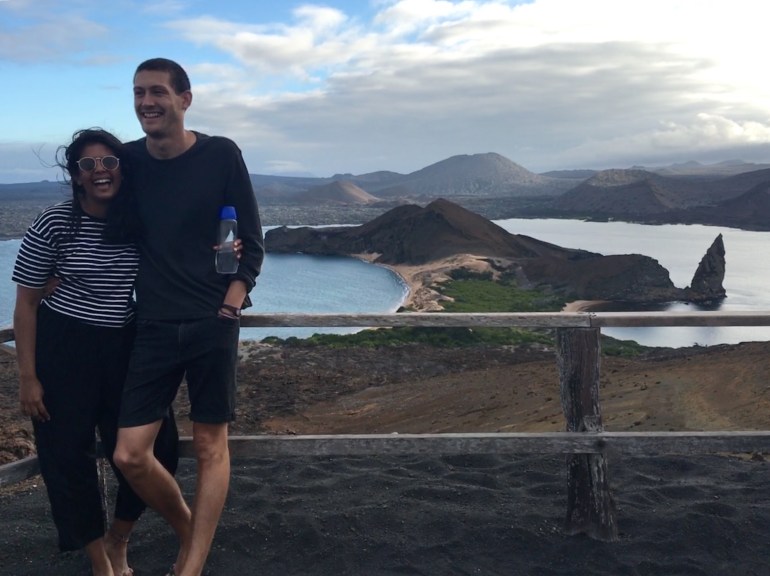 The famous Galápagos viewpoint on Bartolomé with it‘s volcanic black sand
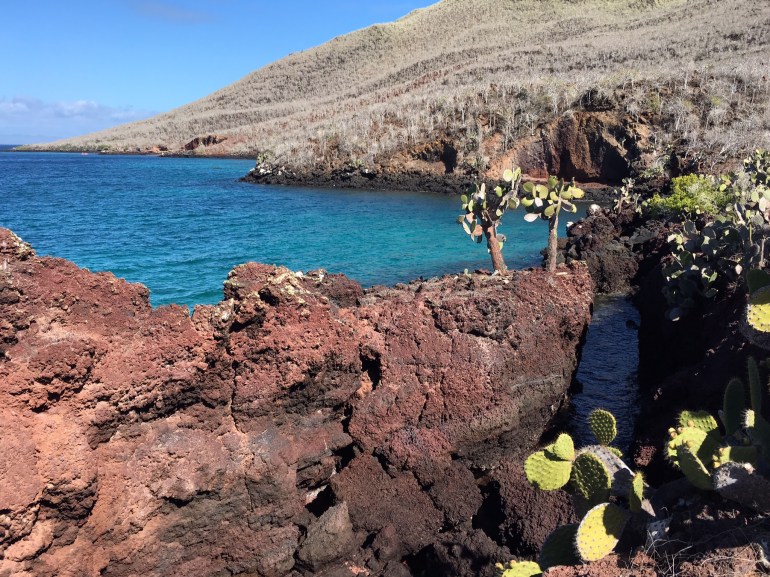 Red rock beaches of Rábida
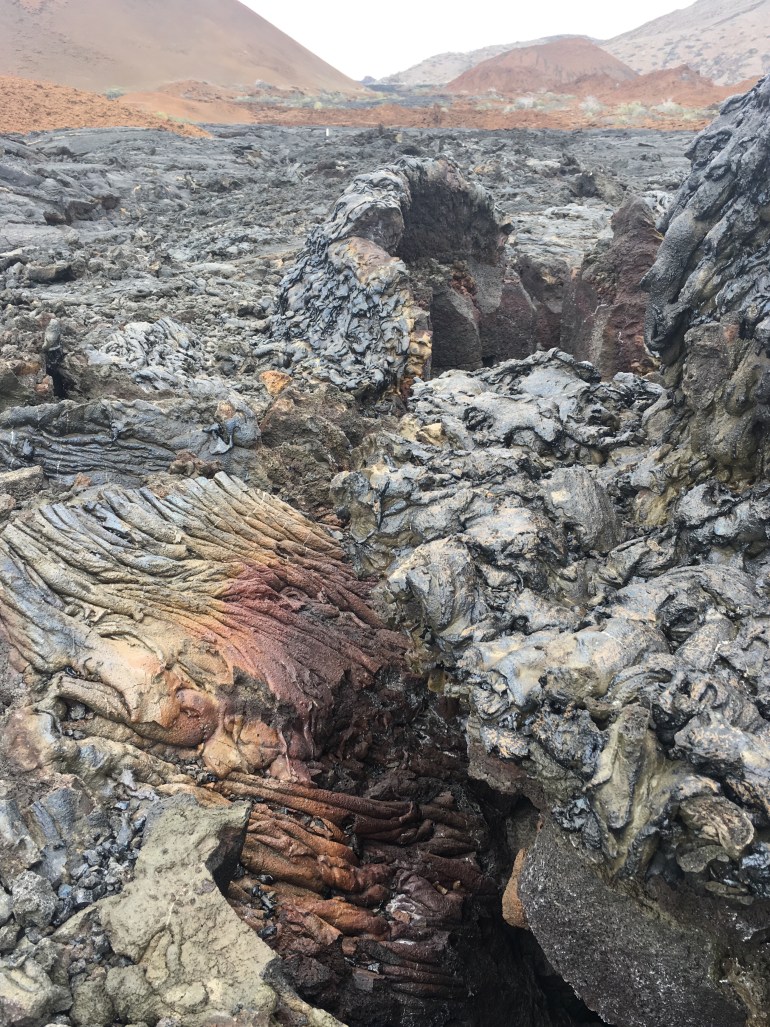
One morning we took a walk across the lava field by Sullivan Bay, on the island of Santiago. The lava field was formed from an eruption in 1910 which lasted for a month, completely changing the look and feel of the landscape. The eruption acted like a complete make-over, creating wave like patterns in the rock, leaving behind lava tunnels and bubbles where cooling gas was escaping and, after more than a hundred years, provided the nutrition for glimpses of life to begin peeking through the cracks.
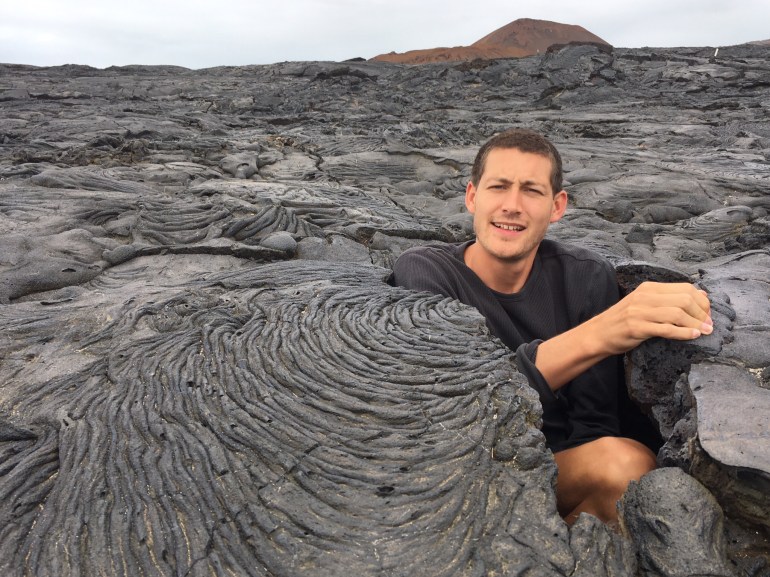 Some of the vent openings were large enough for even the largest humans
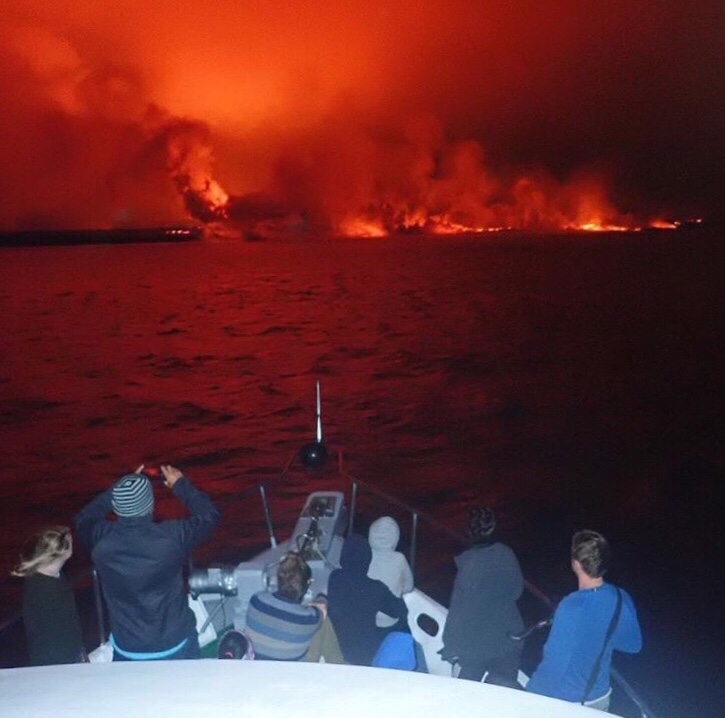
The Galápagos Islands are not, however, a view into the past. On night 9 we came around the corner of the island of Isabela to discover a volcano that had been erupting for a couple of weeks. The captain rang the emergency alarm at around 2am to alert us to that fact he could still see lava running down the side of the volcano. Bleary-eyed, we all crawled out of bed and up to the top deck to see a red glow in the distance. 2 hours later, following a subtle diversion from our planned route, the boat moved close enough to feel the heat of the lava, flowing into the sea. It was a mesmerising experience, being close enough to see lava spewing in a molten, bright orange glow. We all sat on the bridge of the boat in awe of what was happening. We were seeing an island being expanded in front of our eyes, the land formed of fire living up to the name.
Birdlife
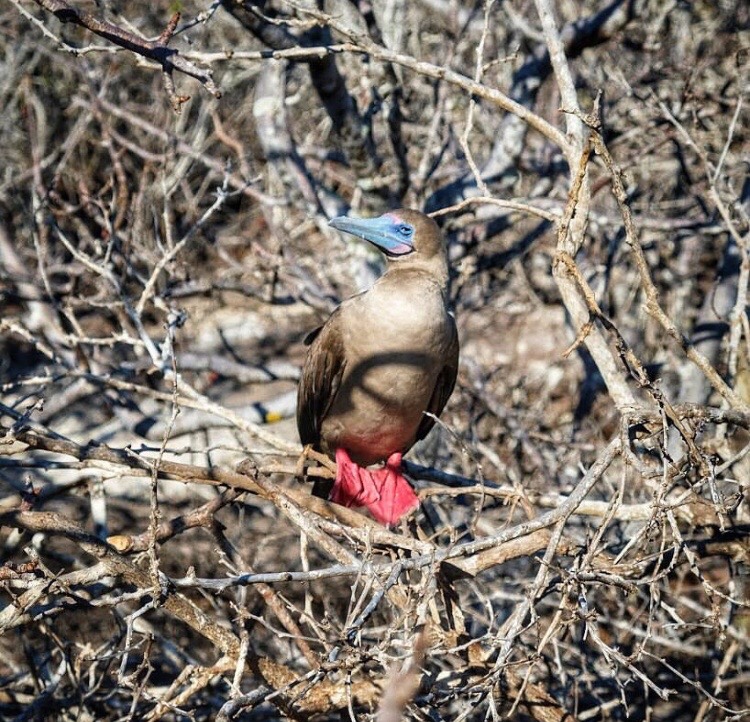
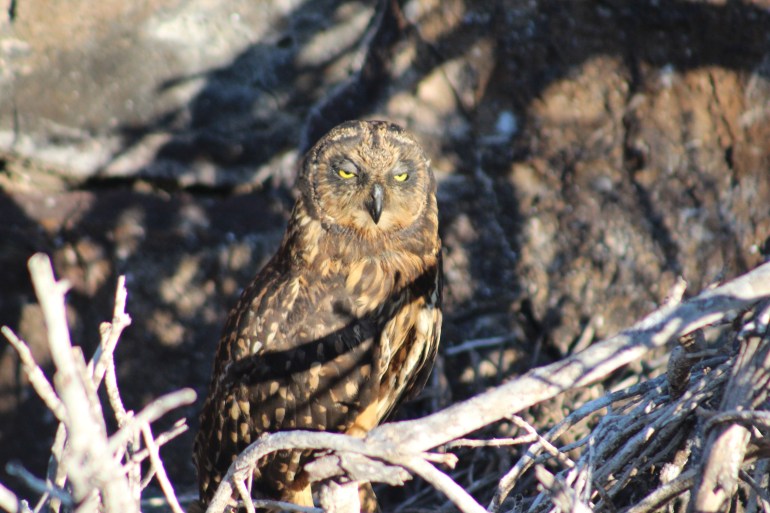
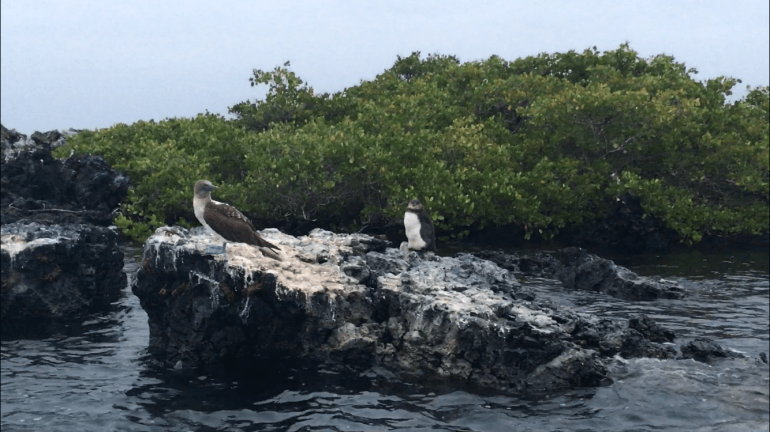
Some of the great musicians and entertainers of the world give themselves a stage name – now, we are not sure if this rule applies in the animal world, but the more adventurous and whacky the stage-name, the more extravagant the act and person. So, upon hearing that the dancing ‘blue footed booby’ takes to the stage on the archipelago, we were hooked. Accompanied by other types of booby birds (performing spectacular diving shows), balloon-inflating frigate birds and the magical elusive acts of the camouflaged Galápagos owl – birds became a must-see show.
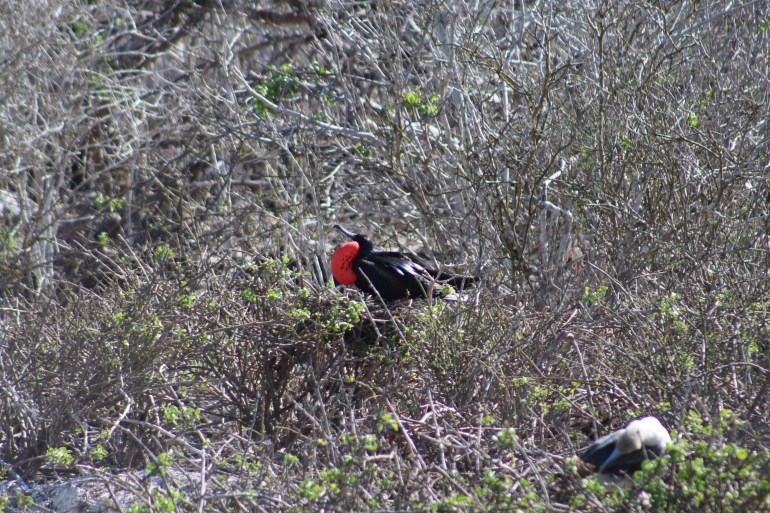 ‘What a good looking sack you’ve got there’ – impressing the ladies, a frigate bird shows off his red balloon like neck.
Our favourite bird of the Galápagos was the penguin. They are becoming a rarer sight due to the effects of El Niño and have a diminishing population, with only 2000 left on the islands. Despite their rarity and size (they are tiny), we were lucky enough to see them speeding through the water while we snorkelled off Bartolomé. We attempted to follow one before it jumped onto a rocky ledge to join its mate and little chick. It was amazing to see, and swim with, these little guys so close to the northern hemisphere (the only penguin that makes it over the equator).
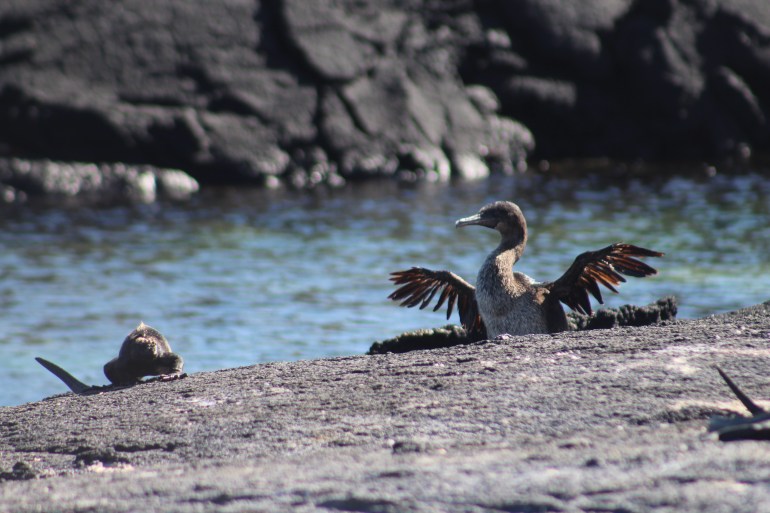
Not as cute but equalled as impressive swimmers were the flightless cormorants. While on Fernandina, we kept a look out for them – as the name suggests, not in the sky, but in the water. They’re shrinking wings had resulted from no predators knocking about and evolved to give them an edge in the water in the hunt for food. We spotted a few waddling around the shore but in the water the bird’s looked far more graceful and very quick.
Tortoises and Turtles
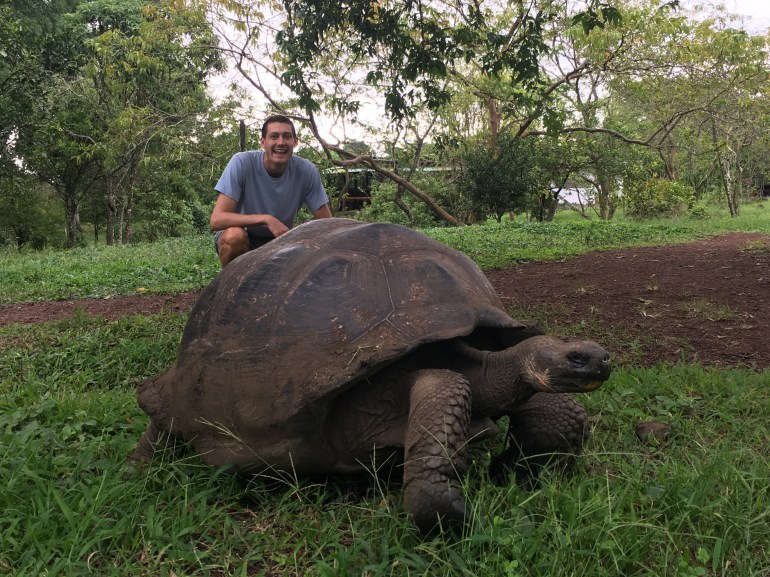
The namesake of the islands, the giant tortoises that romp around the islands are quite a sight, we couldn’t believe the size of them. We got close enough to have human scale comparisons and, naturally, mimic tortoise movements (cue slow, crawling impressions amongst the vegetation – a tricky skill to master). Living up to 200 years, these guys have seen it all and some tortoises alive today will have even been seen by Charles Darwin. Though at one point severely endangered, when seamen would take them for meat as they can survive up to a year without food, the islands have made a big effort to restore populations across all the islands. While no doubt Darwin was an impressive guy, we’re pretty sure and think the tortoises would agree, we’re glad it was these guys that lived to tell the tale.
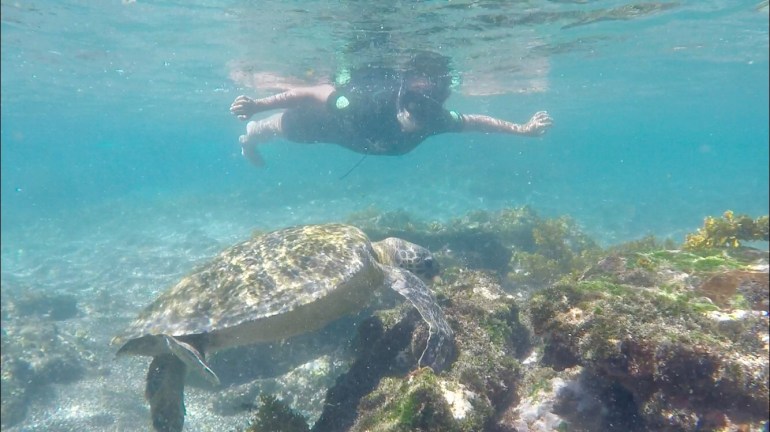
Turtles were the animals that were high, if not top, of our must see list. With only 1 in every 1000 eggs of sea turtles surviving to adulthood, Galápagos is one the few places in the world their numbers are not declining. To see them abundantly in the wild is an incredibly rare sight in the world. Luckily our penultimate day of snorkelling was a theatre to the most incredible underwater scene – everywhere you looked sea turtles appeared, seeing as many as 6 at the same time. At times we struggled not bounce into the turtles there were that many surrounding us. Unlike ourselves, flapping in the water trying to take photos, the turtles looked so majestic in the water. We couldn’t believe what we were seeing, an incredible, wonderful experience.
Sea lions
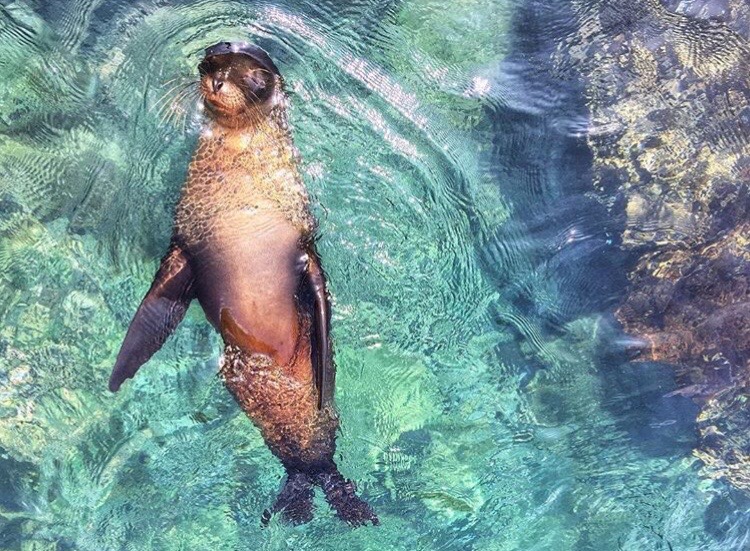
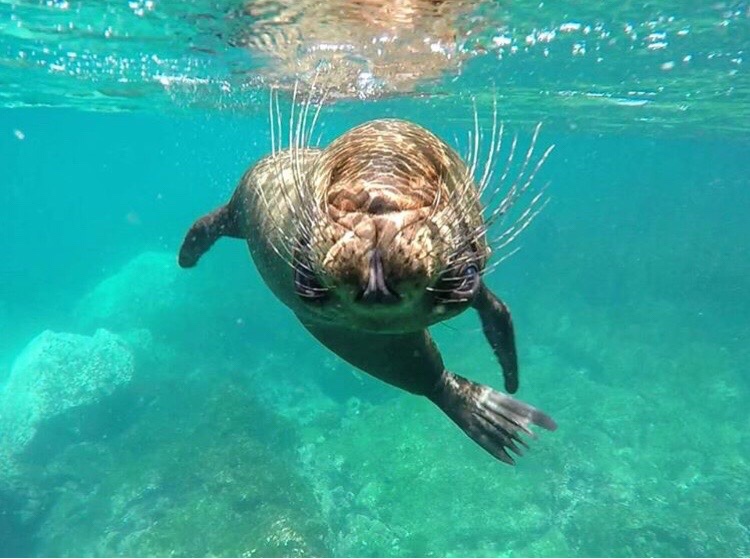
As comfortable as we are in the water, you can never be completely prepared for a giant, agile sea lion hurtling towards you, only to pull away at the last minute. This was underwater chicken, the must-play game (must-play because you didn’t really have choice) of who dares to back down first. A frequent endeavour of ours was to get as close as possible, face-to-face or even nose-to-nose, until we were tickled with a whisker or came away with a face full of bubbles. Of course, on land (knowing that you’ve got the edge), the sea lions look harmless, blubbery and lazy – snoozing away most of the day, catching the sun in almost every coastal corner of Galápagos. The pups were, however, very cute – while on Fernandina, we came across a 2-day old pup with a mother keen to get their first swimming lesson in. No doubt starting them young to master the skills of the underwater human head butt.
 A typical Galápagos beach scene, filled with the islands’ favourite residents
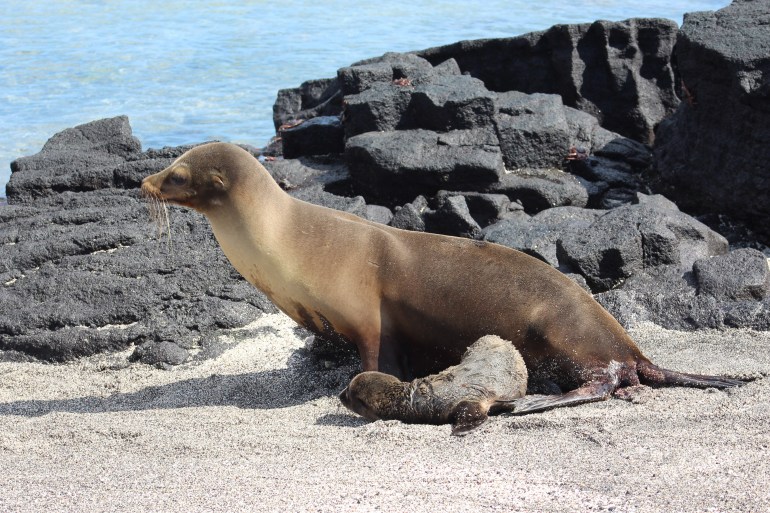 Swimming lesson reluctance from a young un’ equals tired, frustrated mum…
Crabs and Iguanas
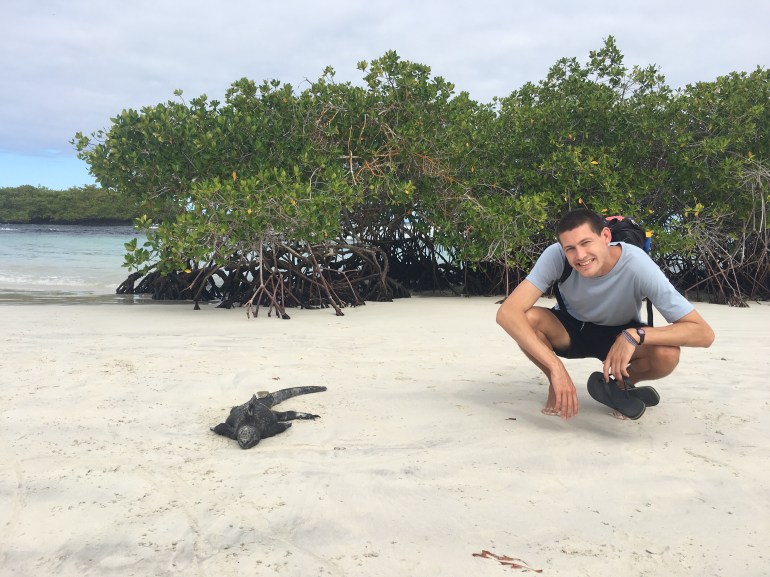
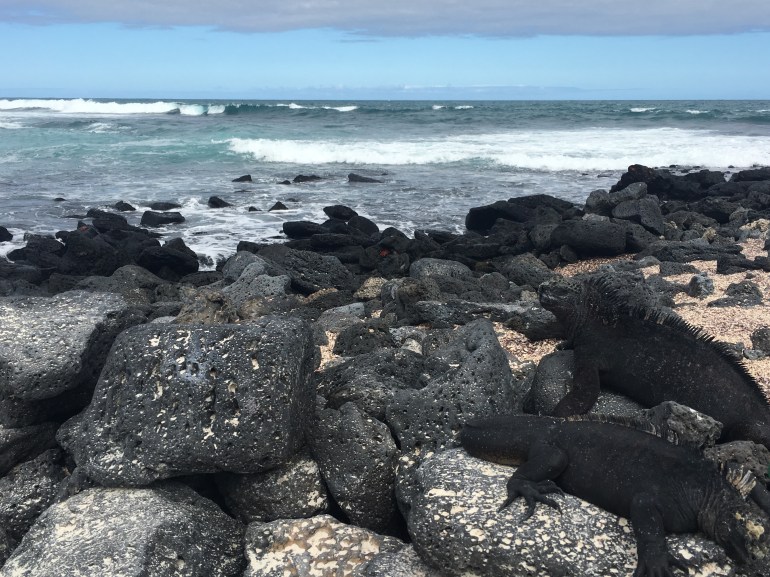
Perhaps the strangest two animals to end up being neighbours were the the bright orange, sally-footed light crabs and the Jurassic Park-looking, scaly black marine iguanas – sharing the volcanic, black rock along the coast. As with every other neighbourhood in the Galápagos everyone keeps themselves to themselves, however on these coastal shores you had to feel for the crabs. Not that most animals are concerned with their aromas or personal hygiene but let’s just say these iguanas were stinky, really stinky. Not only that, their habitual snorting out saltwater from their noses is not the most slightly thing to see.
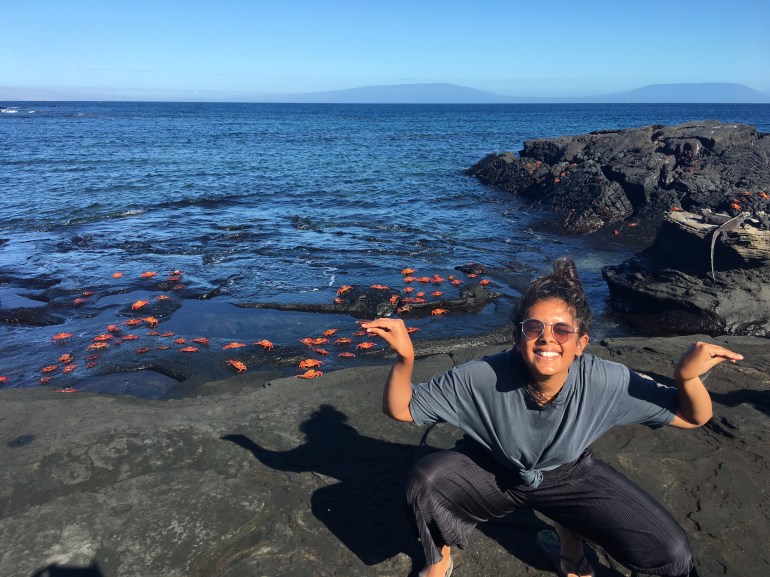
Nevertheless, the only marine iguanas in the world were pretty impressive – surfing gracefully through the waves, chewing down on some algae underwater and boasting an impressive arrival story to the island, floating their way on vegetation rafts from rainforests over 500 miles away. They certainly had a deserved claim to shores of the islands. Although, with all that stink, you could see why the orange sally-footed light crabs were a little on the edge – scurrying and jumping along the shores and back into the water.
Miscellaneous sealife
The Galápagos Islands don’t just strut their stuff on land, some of the most unique underwater action in the world occurs at the shores of the archipelago. Situated at the crossroads of three ocean currents, there is convergence of different water temperature and therefore amazing diversity in sea life. We couldn’t wait to jump in and explore.
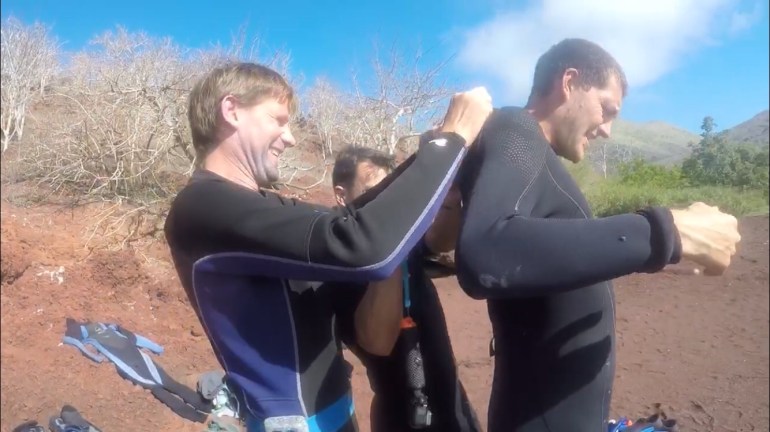
Sadly, none of the converging currents were comfortably warm. This didn’t stop Cal from (stupidly) braving the cold waters for the initial part of the cruise, before eventually admitting he needed a wetsuit. The largest available suit didn’t quite fit and so a support team was called in to help squeeze the wetsuit around him. While helping with the cold, it seemed the price of warmth was forgoing the process of breathing, but you can’t have it all!
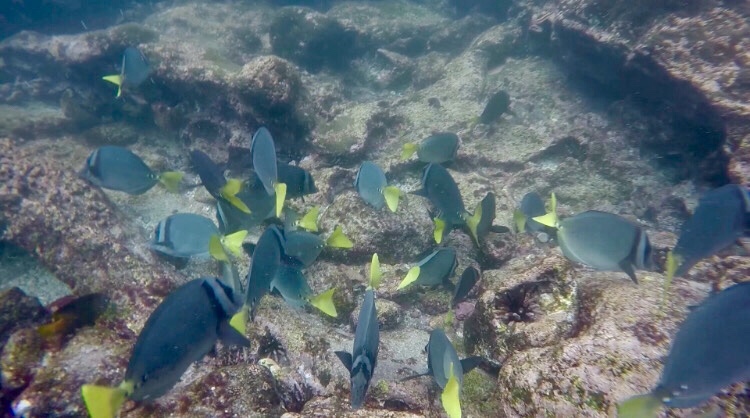
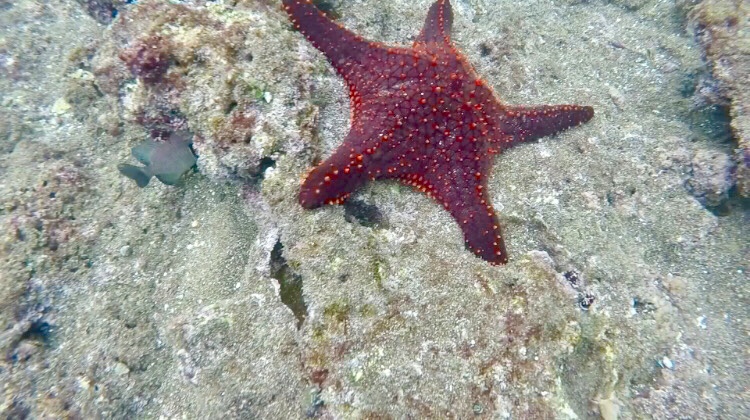
With a combination of coral reefs, mangroves, deep ocean plateaus and shallow lagoons, we honestly never knew what we would find in the water. From sting rays grazing the bottom of the sea bed, eels popping up from the sand until you got too close, and a mixture of beautiful tropical fish, we were amazed every time we got in the water. Snorkelling and swimming amongst the thousands of colourful fish was definitely one our highlights of the trip – including the humble parrot fish, whose excrement gave us the beautiful white sand on the beaches.
Sharks
Sharks in Galápagos are known for being relatively subdued and therefore safe to swim with. Still, you say shark, you hear the Jaws theme tune. Our, slightly estranged guide, Jorge, tried to calm nerves by saying there was plentiful food to keep sharks away from humans. Although, worryingly contradictory to his earlier information, he then said there had been some recent attacks on tourist flesh. Still, brave faces and off we go…
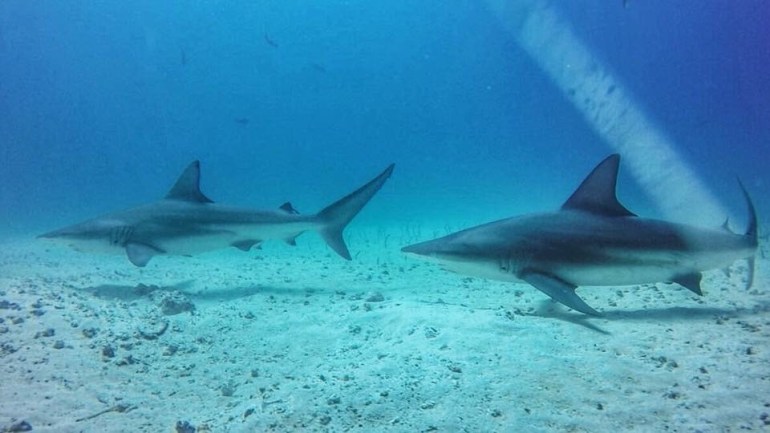 The smaller black tip reef sharks that did nothing to curb our fears..
Our first afternoon on the boat was dedicated to the hunt for hammerhead sharks. Earlier that day we had come across reef sharks, supposedly small and not terrifying in the slightest, but they were still daunting enough. A tense atmosphere had gathered on the dinghy boats, taxiing us to the home of the hammerheads. Once we jumped in, it felt like safety in numbers was a good tactic to deploy, all of us were very well aware that just 4m below us, sharks could be circling. With the jaws theme building in our heads, Cal spotted something large a couple of meters below. But it wasn’t a shark, it was a trumpet fish. A long, skinny fish that Rosh claimed was the embodiment of Cal (google for elongated comparisons). Sadly (or breathing with relief), we didn’t spot any hammerheads – thankfully the images of Cal’s uncanny fish lookalike provide sufficient entertainment back on board.
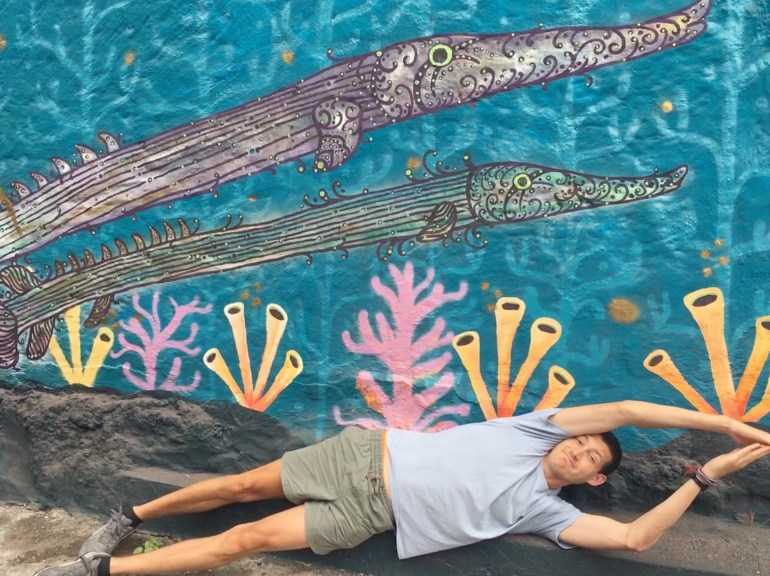 While the seas might not have been particularly clear for a real trumpet fish photo, once we saw this mural we (Rosh) knew we (Rosh) had to take advantage of the situation!
Of course, you were never really that far from danger. On the boat, we saw at least 8 Galápagos sharks (a cousin of the great white) circling us and we couldn’t believe just how close we had been to them whilst swimming in the water. That evening as the sun set, we flashed a torchlight into the water and watched them menacingly swim around, even spotting them come dangerously close to consuming a couple of baby turtles. After a final, super close encounter on Cal’s birthday, as a Galápagos shark swam into the bay and under his feet, we were breathless and completely sharked out.
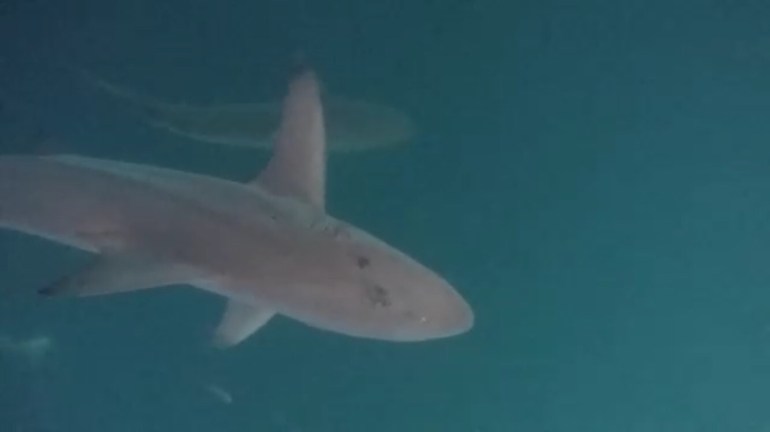 As the larger sharks approached, someone dipped their hand in the water to get this footage. You know what they say, you’ve got to sacrifice (a hand) for the right shot
Whales
Given this is whale season in Galápagos, we were quietly hopeful that we’d spot something as we passed through the channel between Isabela and Fernandina. To paraphrase the great Martin Luther King, Rosh had a dream. Differing slightly from wishing for a world of equality, Rosh’s hopes centred on a whale, leaping out of the Pacific Ocean, preferably a humpback and ideally just as the sun was setting. The scene was set – we were cruising in the hotspot for a sighting, approaching the equator as the sun began to sink into the ocean. We desperately searched for the last two hours of sunlight, but there was nothing. Knowing that channel was our best bet, we resigned to the fact that it wasn’t to be.
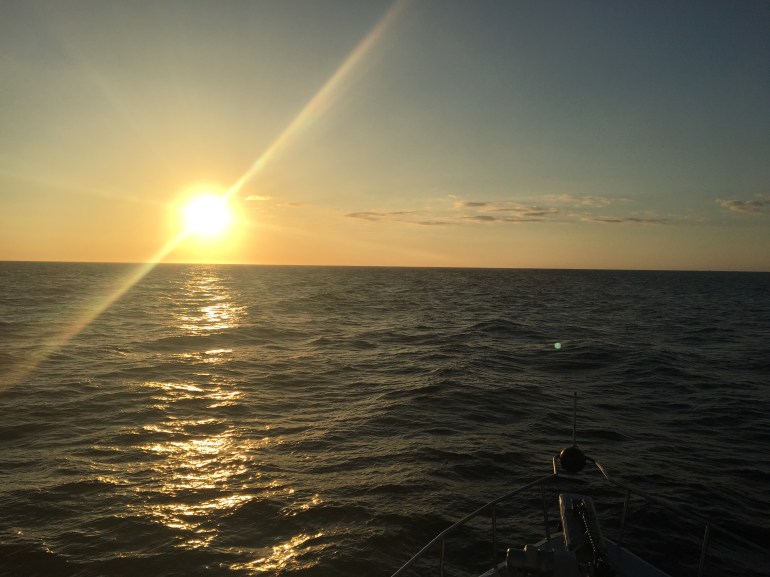
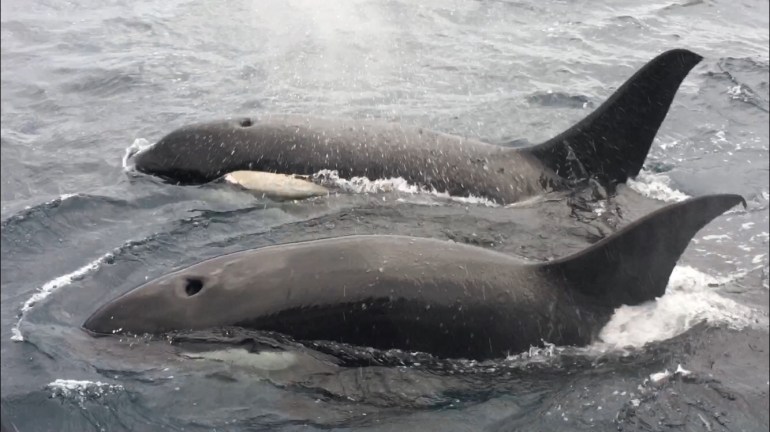
Fast forward a couple of days to our last moments upon the boat, en route to the dock and flight home. Whilst finishing up some last minute packing, we heard bellowing shouts from above of “WHALE!!” We moved quicker than lightning, dashing to the top deck. As if Galápagos was not quite ready to say goodbye, several orcas (killer whales) emerged from the ocean to greet us. Staring in amazement, we couldn’t believe that we had spotted them. Two minutes later, we were left stunned. The orcas approached the boat for a closer look – we had found ourselves in the lower decks at the perfect moment, within touching distance to the giants of the depths. An incredible moment.
Humans
While the wildlife had left us in amazement, the human company we had throughout the trip was awesome. From the crew who made us laugh everyday, the captain who de-toured twice to ensure we had the best experience possible and the travellers who helped plan a surprise birthday celebration for Cal, we felt like we had hit the jackpot. We regularly enjoyed Jorge’s impression of all wildlife Galápagos had to offer, we had a little dance and sing of Auld Lang Syne as we crossed the equator on the bridge and settled down one night for a movie with David Attenborough himself.
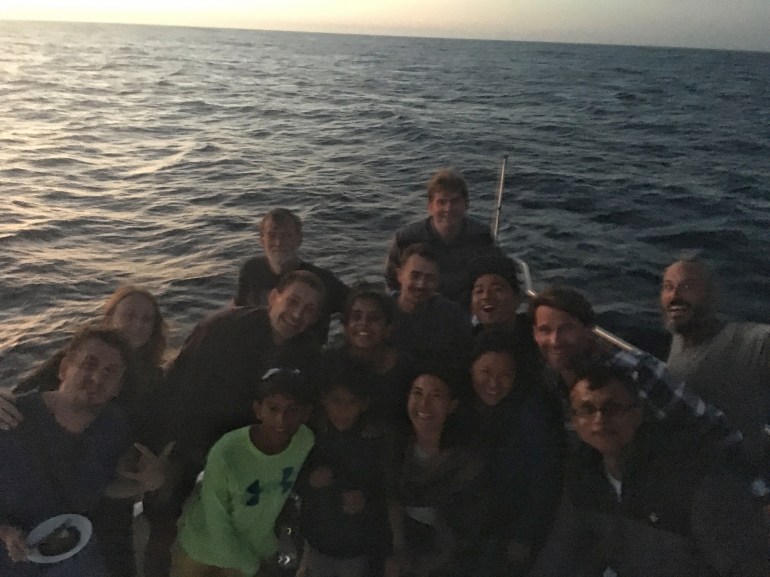 A blurry barely a photo, photo – trust us when we say the memories of this equator moment were worth it
One memorable moment was during a snorkel expedition searching for a bull-head shark. With the water strangely murky, visibility was obscured and there was little point getting cold for nothing – this was when Cal decided to jump back in the small dinghy. With half of his body back in the boat and one leg dangling into the water, the young crew member, Carlos, screamed “SHARK”. Panicking and feeling something touch his foot, Cal fell head first, his legs folded into themselves to depict a sprawling mess. Looking up, he saw Carlos creasing with laughter, throwing a small piece of seaweed onto Cal’s pale, shaken face. From then on, Carlos referred to Cal as the ‘seaweed shark’. Hilarious.
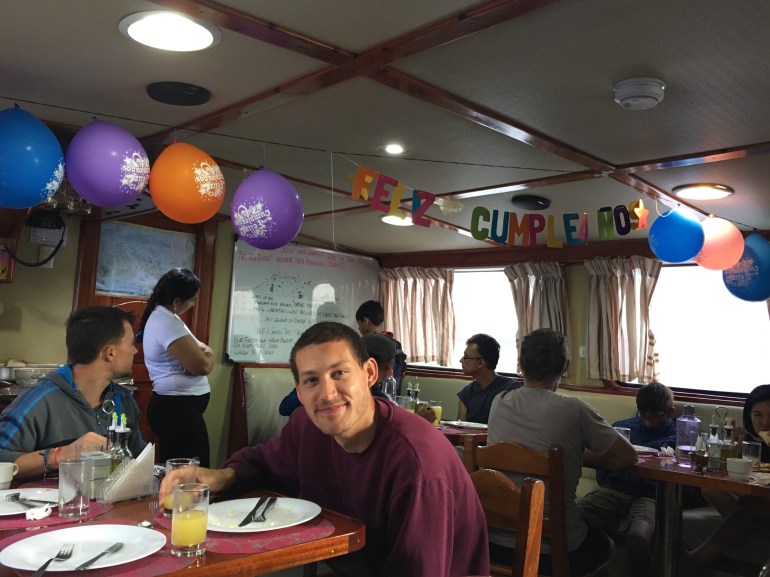
Our final night on the boat coincided with Cal’s birthday and there was already a party planned to celebrate our time on the islands. It was the perfect excuse to join both celebrations and make an event of it. While some of the team were upstairs distracting Cal with beer and traveller chat, Rosh and a few more were downstairs blowing up balloons and asking the chef whether we could stick a candle in whatever fruit dessert he had planned for that evening. Once we had hung all the decorations and managed to get Cal downstairs in time for us all to yell surprise, the chef surprised us all with a huge cake big enough for the double celebration. Caipirinhas and beers were consumed, a lot of games were played, and it was the perfect end to an unforgettable trip.

Soggy shoes: Twice on this trip we came dangerously close to reenacting scenes from Titanic. Prior to our boat cruise on our ferry crossing from San Cristobal to Santa Cruz, we placed ourselves at the back of the boat which was open to the elements. None the wiser we took off for a 2.5 hour trip, only to be constantly sprayed by the ocean waves. At first it was relatively light and although not ideal, we stuck with it. Maybe 15 minutes after leaving, the waves were coming in thick and fast. What surprised us the most were the people on the other side of the boat seemed to get off lightly and remained dry as the desert. Wave after wave lashed down, and even when dolphins joined the back of the boat to jump through the waves we were creating, we could only keep our eyes open for seconds before the next wave crashed upon us. Needless to say, we spent the next 2 days trying to dry out all our belongings and ourselves.
Soggy shoes II: We were forewarned that the night we travelled from Isabela back to Santiago could be a rocky one as we were going to be in unsheltered open water. Possibly an understatement to events that followed. The night was definitely choppy, with bodies being lifted off beds regularly as we crashed through the large waves of the Pacific. Cal on the bottom bunk switched between seeing an incredibly clear, starry sea when we were on top of waves to the deep blue as we crashed through them. The next thing we heard was a splashing that seemed a lot closer to home. As we turned on the light we saw water pouring in through our door, swishing around the floor of our room. One look out of the window confirmed the whole deck was near submerged and as we lay towels down to soak up all we could, we hoped our drying swimming gear was still clinging on to the deck of the boat (luckily they survived, as did we)!
Love & hugs,
Cal & Rosh xxx
 The Los Vagans
Now that is a dream. Photos are wonderful but I’m sure nothing will match what is in the minds eye. Makes me wish I had come out as originally planned. Seems you had the perfect ship with the perfect companions and those shirts at the birthday celebrations – outstanding.
Rosh, did the boat ride remind you of the night bus ride in India? Across continents but same same. Jealous but so happy for you both. Seems time is running out to enjoy this great wonder.
LikeLike
Looks amazing. Fantastic experience. I feel like I would love to do it now though I was not keen at first. The live volcano must be an experience of life time. Well done you two. Enjoy the rest of the travels.
Love you
Jigna xxxx
LikeLike