We waved goodbye to La Paz and all her bizarre rituals, only to climb higher into the Andes. We drove west to the border of Bolivia and Peru, traversing lakes via boat crossings and winding through the hills, eventually arriving at the highest navigable body of water in the world, Lake Titicaca.
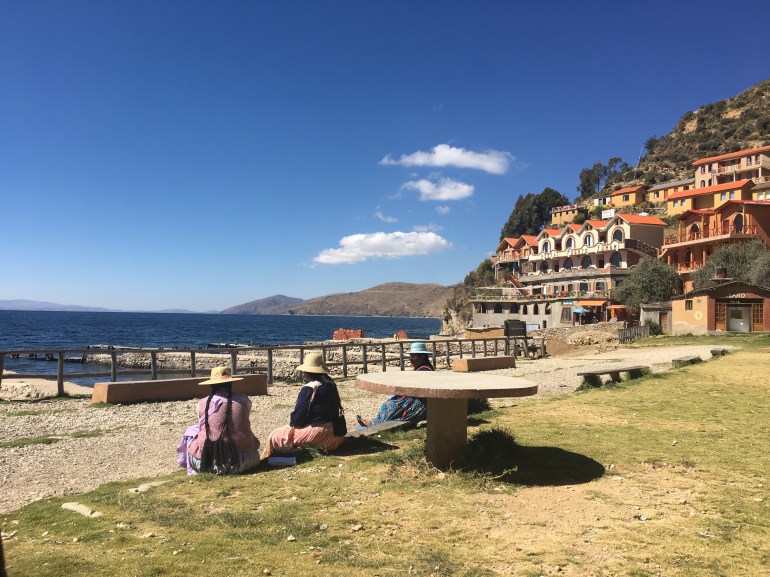
Our first stop was the small town of Copacabana, sitting on the Bolivian side of the lake at around 4000m above sea level. We felt quite sad knowing that this would be our last stop in Bolivia, but we had heard great things about this side of the lake and still had a couple of days of adventure left. Luckily Copacabana also gave us one last fill of life in the cheap lane, accommodation for £3 a night, hearty breakfast for £2 and enough ‘bargains’ to be found to satisfy shopping cravings (a giant fleece that would end up saving us in more ways than one).
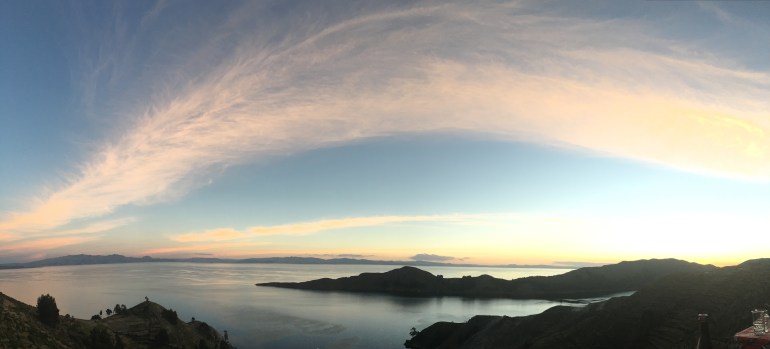
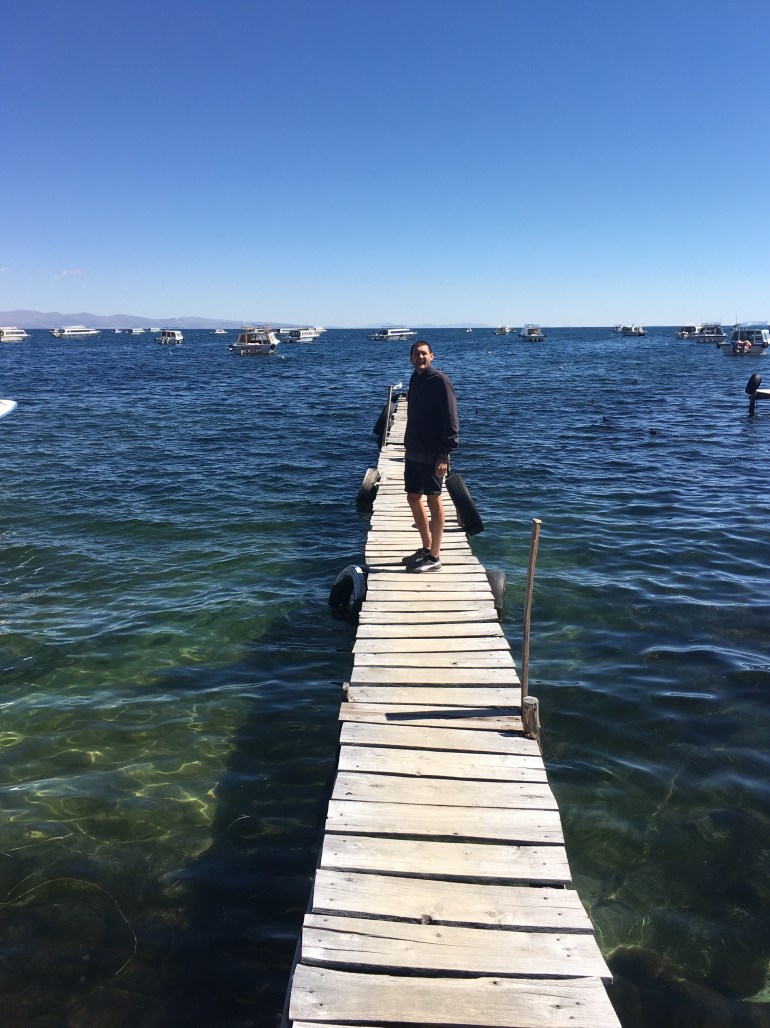
We spent a day marvelling at the stillness of the lake and opting for a relaxing afternoon with beers and food on the lakeside. The sunset shimmered on the lake as we sat on the pier and stared out onto the large expanse of water. We were enjoying being near water again and felt a sense of calm after the chaos of La Paz. That evening we enjoyed a final meal with Tim and Jana who were heading to Peru on a tighter schedule than us. Having endured the great Bolivian blockades together we’d been through a lot, but we agreed to meet Jana in Peru as she was hanging around for a little bit.
Our next day brought us a trip to a remote island in the middle of the lake. We set off to Isla del Sol (according to Inca legend, birthplace of the sun – Inti). Sadly, and in line with our expectations of Bolivia, the north of the island was closed off because of strikes but we explored the southern half. It was a rugged, ancient place that felt almost undiscovered – there are no cars on the island and the cobbled lanes are home only to shepherds and donkeys, transporting goods up and down the hilly island.
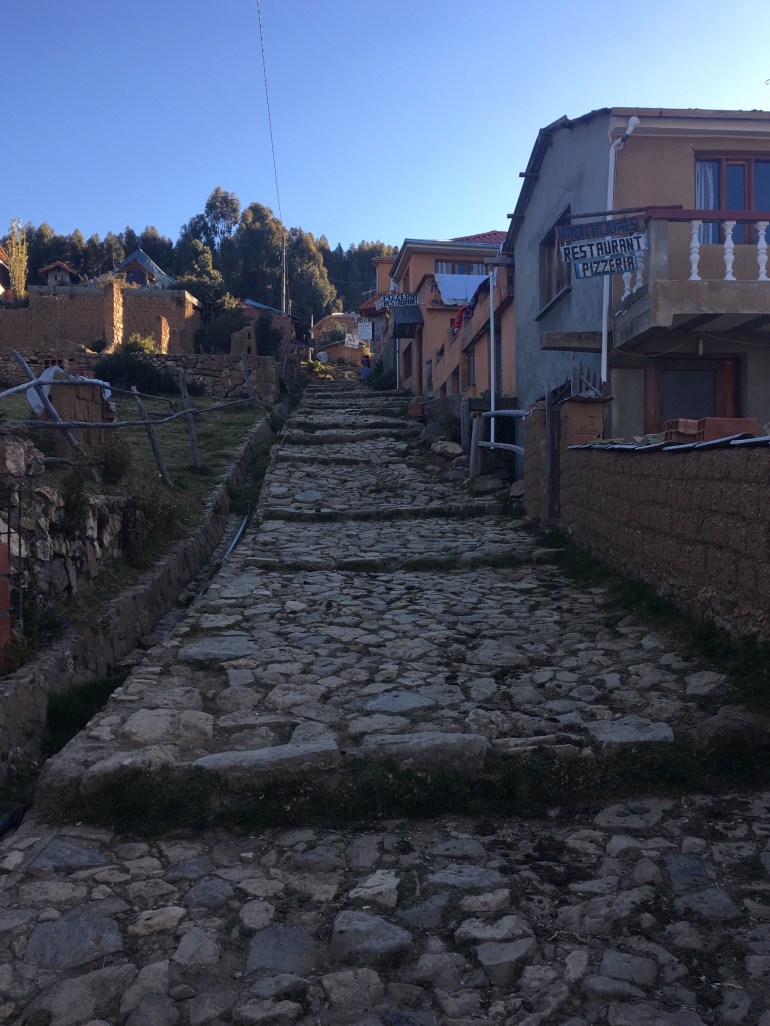 Known as ‘Inca steps’ at most sites across the old empire, these are famously uneven, unsteady and often require large lunges
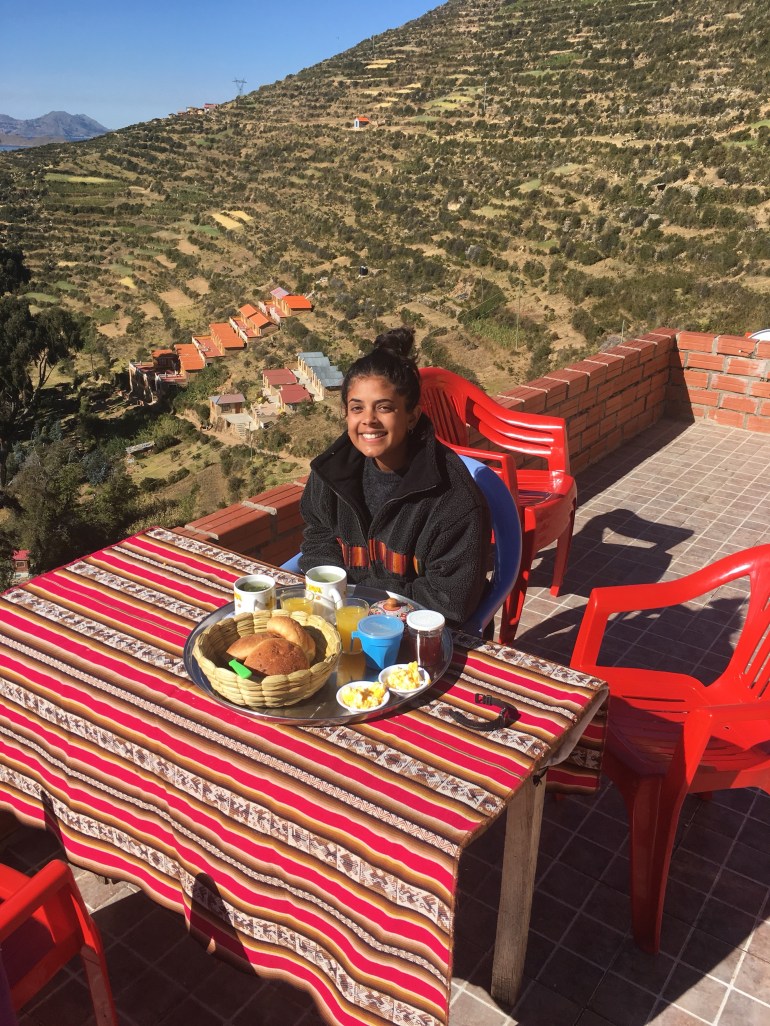
We spent the night venturing around, dodging donkeys and watching a beautiful sunset on the lakes’ enchanting waters. From the top of the island we spotted the edge of Peru towards the west, our next stop and 6th country of the trip, and to the east a final glimpse at the Bolivian Andes, Isla del Luna (the supposed birthplace of the moon), and the beautiful Bolivian countryside. It was wonderful goodbye to Bolivia, one of the contenders for our favourite country of the trip. We will miss it greatly.

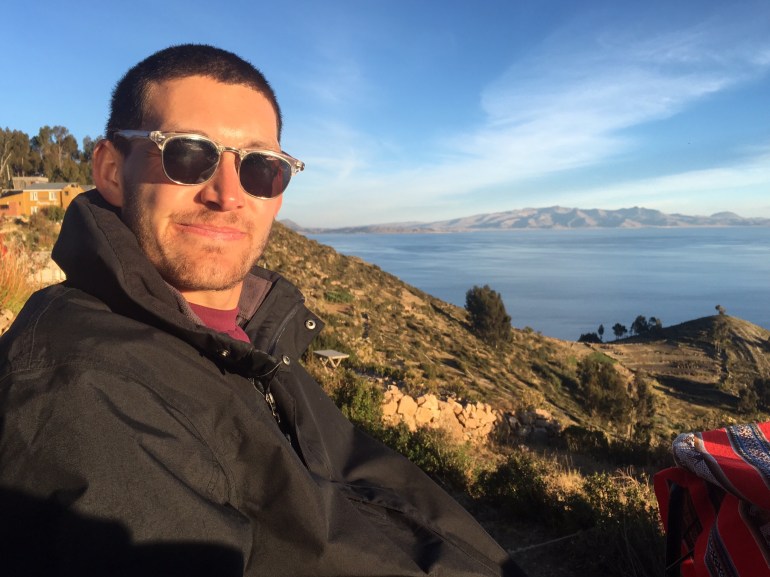
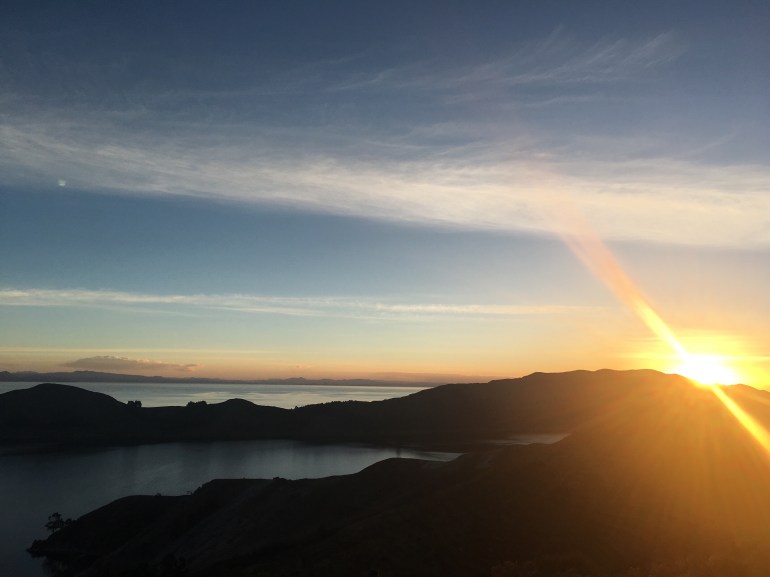 The 3 views from the top of the island – Bolivia, beers at the top, and Peru on the horizon
Next up, Peru. We hopped on a bus and drove 3 hours around the lake to Puno, Peru’s lakeside town. Puno felt vastly different to the quiet charms of Copacabana, this was a busy, loud and sprawling town. We had fallen in love with the Bolivian side and so agreed on a swift, 1 day whistle-stop visit.
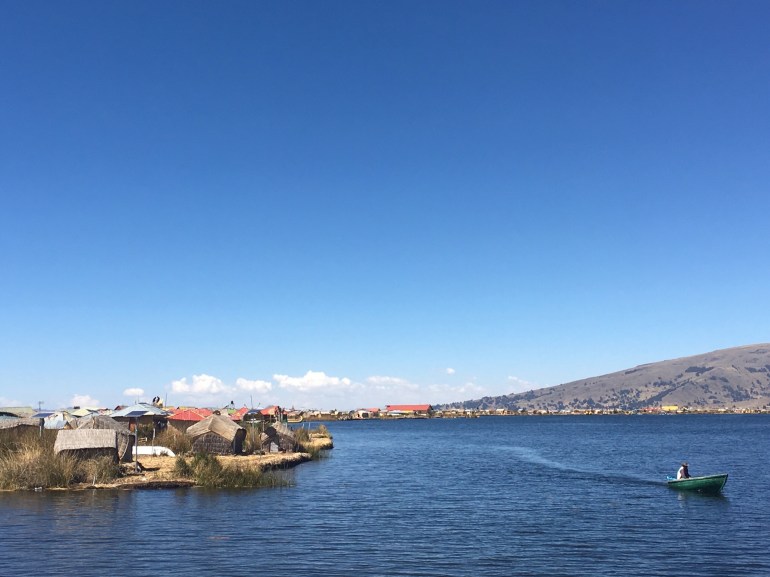 The root system of the reeds is naturally buoyant allowing the islands to float, and new reeds replace the old ones once they get waterlogged so they remain sturdy
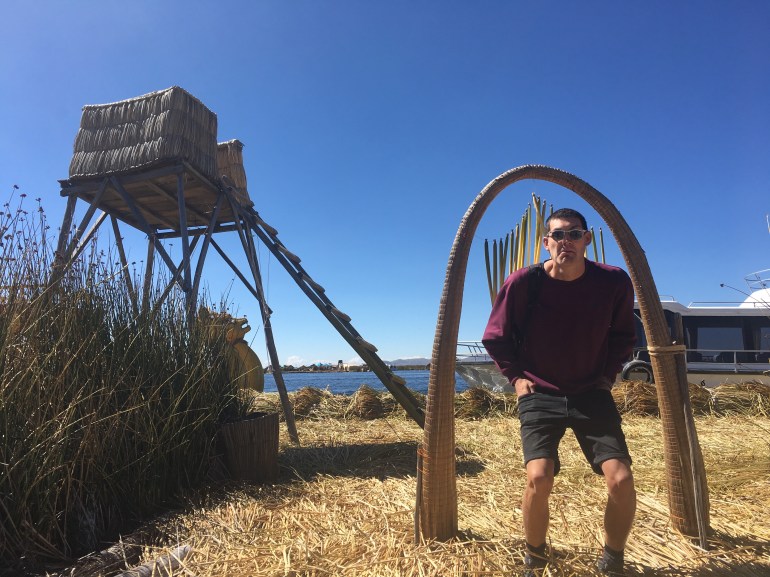
Our quick tour of Puno featured venturing out onto the lake to visit Uros, a series of floating islands made from reeds growing in the lake. People still live on these islands, sustaining themselves mostly on the reeds as a means of construction and food. However over the years, the independent life on the islands had become slightly less ‘pure’ with many working and being educated on the mainland. Away from the selection of gift shop goodies that suddenly appeared from the reeds, the islands were still impressive and reminded Rosh of the islands on Inle Lake in Myanmar.
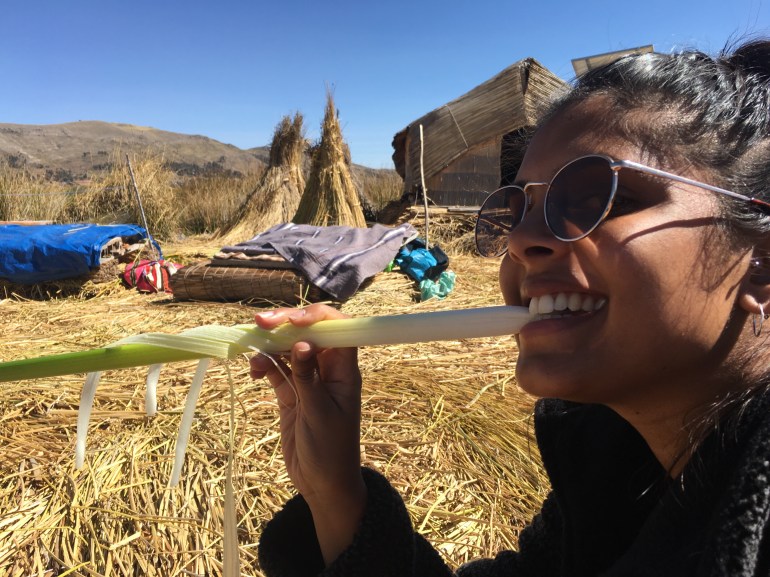 Chomping on a Toyota reed – Cal was put off after being advised they could cause a laxative effect
It was nice to trick our minds into thinking we were close to the coast as we waved goodbye to the people of Uros and continued our journey inland to Cusco – gateway city to the mountains and Sacred Valley. This included the South American highlight that had stared us in the face ever since we had planned this trip – Machu Picchu. We were feeling pretty excited about Cusco, we’d heard a lot of good things – beautiful city, amazing treks to be done and most importantly, Indian food to be eaten!
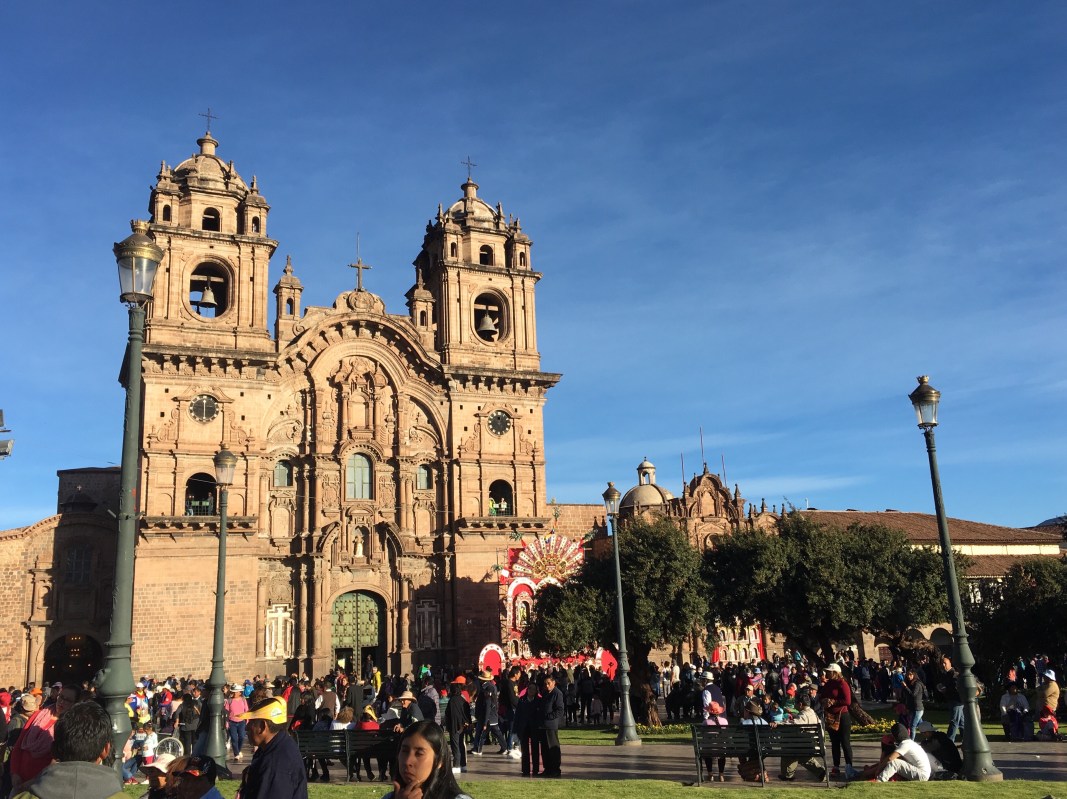
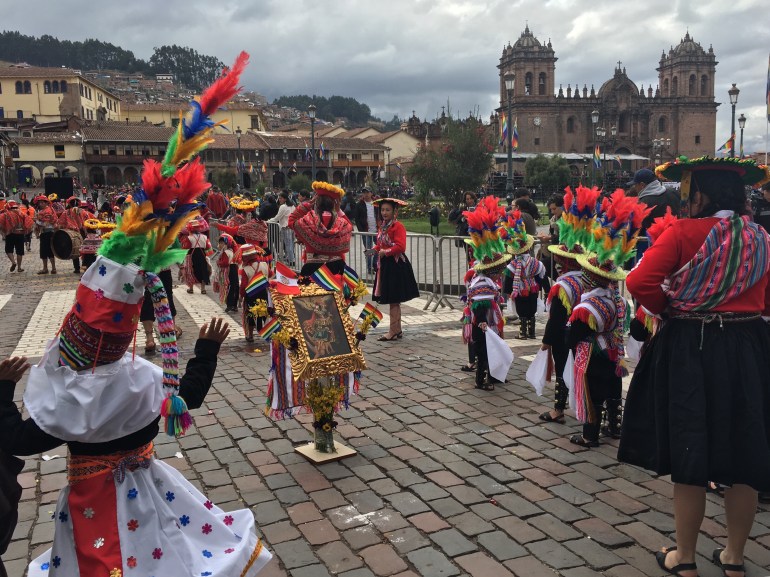
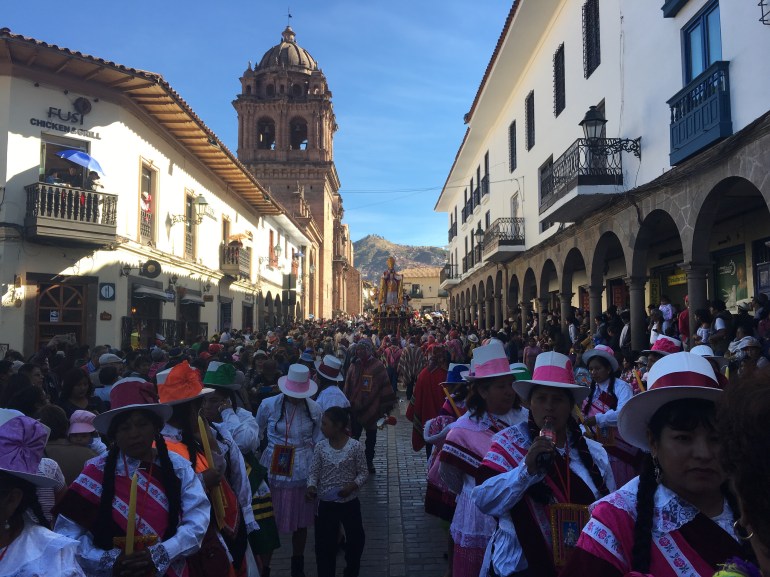
We arrived in the early hours and, as the sun came out, the town greeted us in all its colonial church glory. The central plaza of Cusco was not only filled with beautiful buildings but also hundreds of performers and dancers. June was a month of celebration and non-stop dancing occupied the streets. We had landed into festival fever and were loving every minute of it!
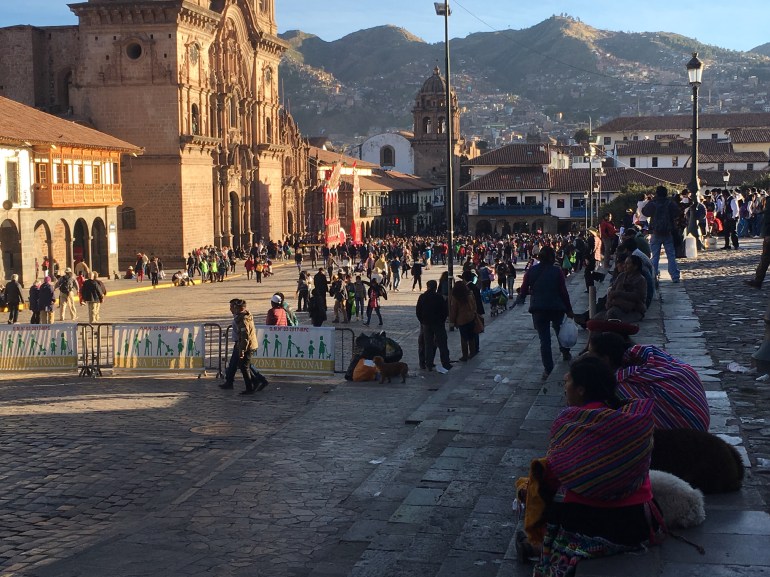
The celebrations that took place were for a mixture of things – religious, cultural and even a day dedicated to the humble potato! However, while we were well into the festival spirit, the festival food was not quite to our tasting – let’s just say neither of us will look at a guinea pig the same way ever again.
We caught up with Jana and her boyfriend, Cyril, who had just arrived from France – deciding that instead of trying furry delicacies we would embrace the views of Cusco (and European culture) with a local beer at the world’s highest Irish pub, gazing over the central plaza. That evening we got round to sampling some Peruvian culture through food, tucking into a delicious mix of sushi and ceviche.

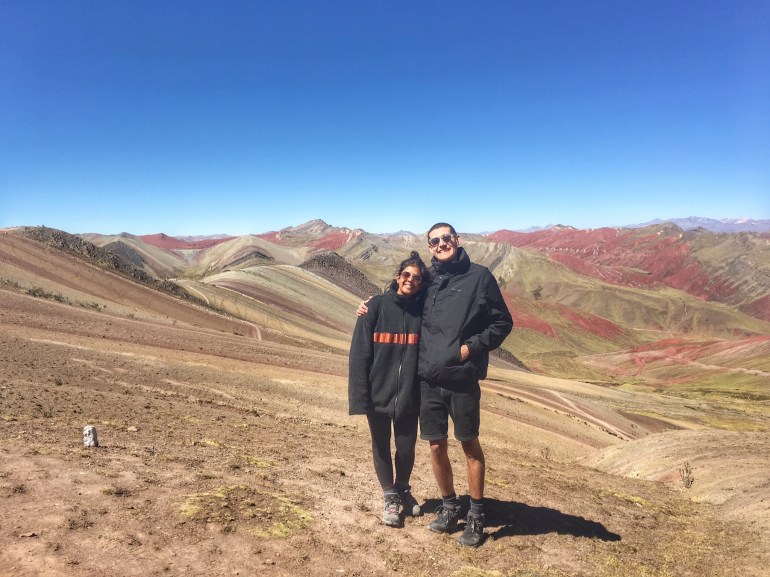
The following day we challenged ourselves to our first hike and although it was only a short walk, it was one we were very excited about. We had found an alternative to the very touristy Rainbow Mountain and discovered an almost identical viewpoint but without the hoards of tourists. It was a brilliant find because it was one of the most incredible landscapes that we had ever seen. After a short but breathless climb (we hadn’t shaken off the altitude yet, cruising at an altitude of 4,800m and peaking above the 5,000m point) we were left amazed by the yellow, red, white and turquoise colours that made up the mountains. One of our favourite views of the trip!
Back at a comfortable altitude in Cusco (comfortable at this point was classified as ‘significant difficulty breathing during gradual hills’) we looked onwards to the crowning jewel, Machu Picchu. However there was one problem facing us, how to get there? Most people take either a bus or a train (or the Inca Trail which requires months of planning) but we had heard the the most rewarding experiences of Machu Picchu included a pilgrimage to the site, just as the Incas would have done. Our *ambitious* aspirations came across the Salkantay trek. With Rosh not having completed a multi-day hike since the days of bronze DoE we knew this could be a challenge, especially climbing to heights of 4,600m. But it had been labelled as one of the best hikes in the world by NatGeo, and who are we to argue with them (pre-Murdoch, don’t worry)! And so began the rise of Rosh the reluctant hiker.
 The coldest temperature we experienced on the hike was -15 degrees. So that fleece we mentioned earlier..
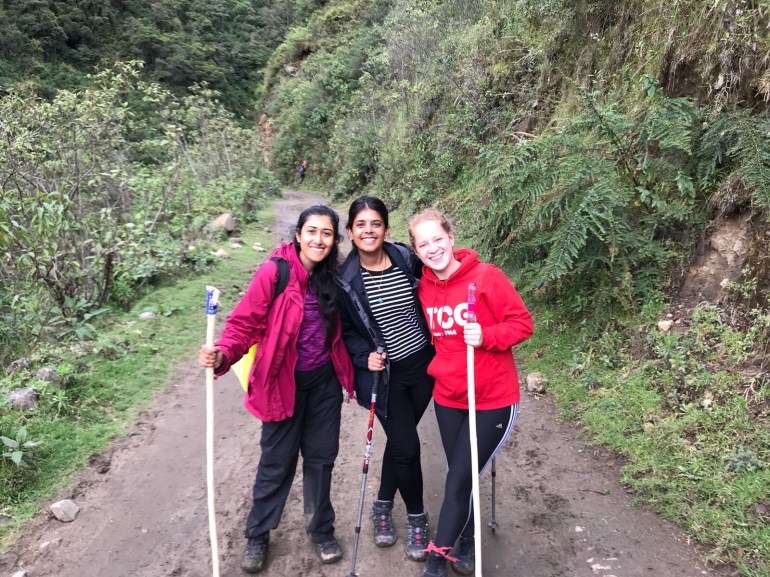
So that was us. Signed up to a 5 day, gruelling hike, passing mountains and jungle while camping overnight in the freezing cold. We joined a group of around 30 others at the starting line and were in great company as Jana, Cyril and Kanika had all joined us too. With walking sticks in hands, knees strapped up to the max and enough trail mix for Hansel and Gretal we were off. We had almost 80km ahead of us and we were forecast fairly clear skies and incredible views.
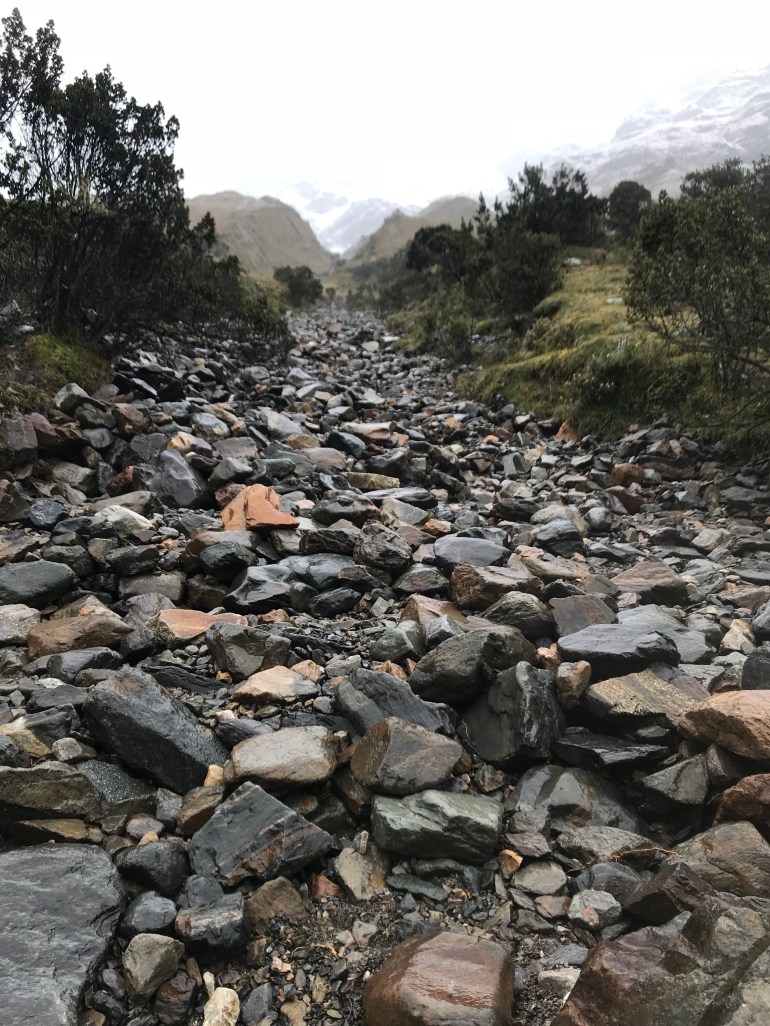
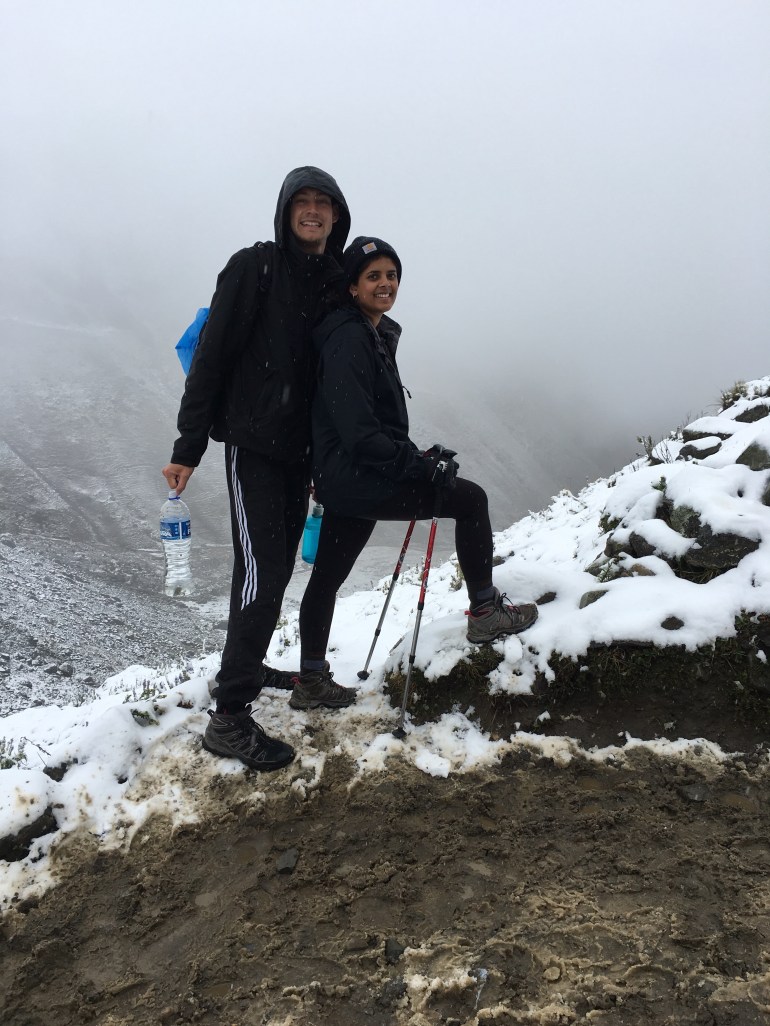
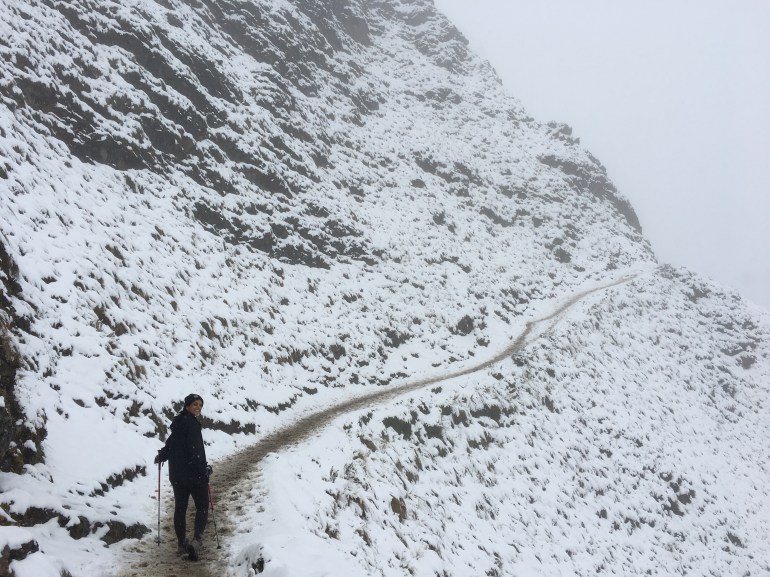
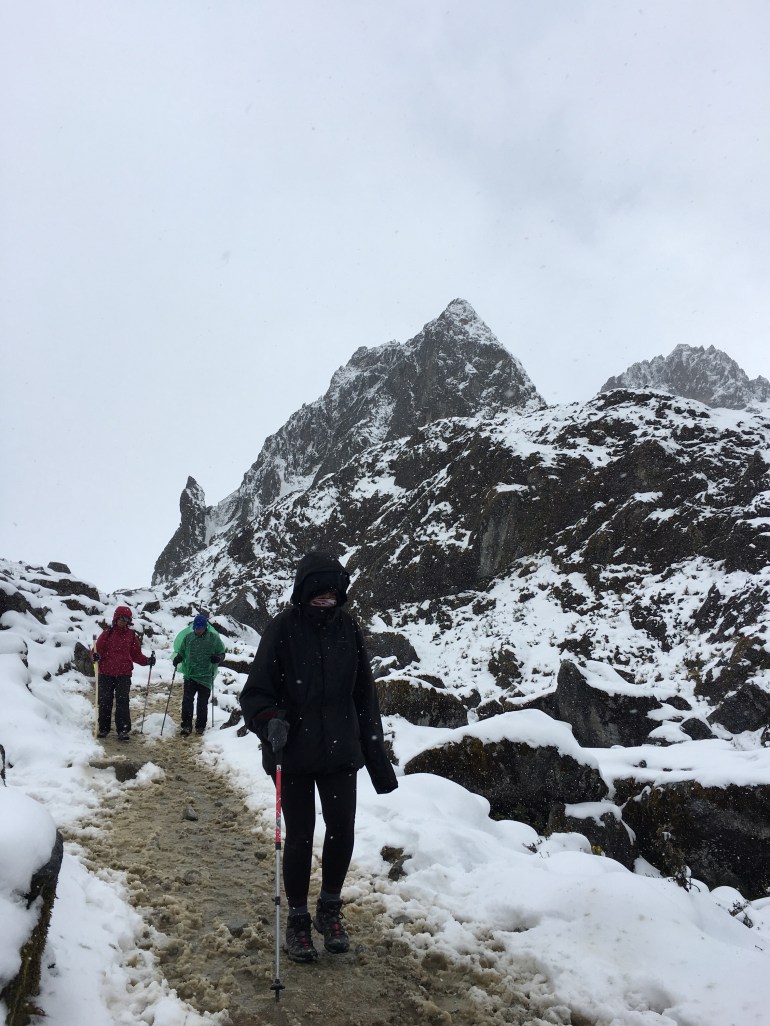
What greeted us for the first two days was bone shattering cold, wind, rain which all culminated together into a blizzard while climbing to the 4,650m summit. It was disappointing because we couldn’t see anything except the person in front of us – there were no views, only pain. It was brutal. However, and quoting Cal’s Dad here, ‘it’s all character building stuff’. Certainly for Rosh, who had essentially faced hypothermia on top of the mountain, this was a triumph. Cold, wind and icy ascents had been beaten! The reward for our snow storm climb was natural hot springs at the bottom of the valley – necessary to soak away the pains (more mental than physical perhaps).
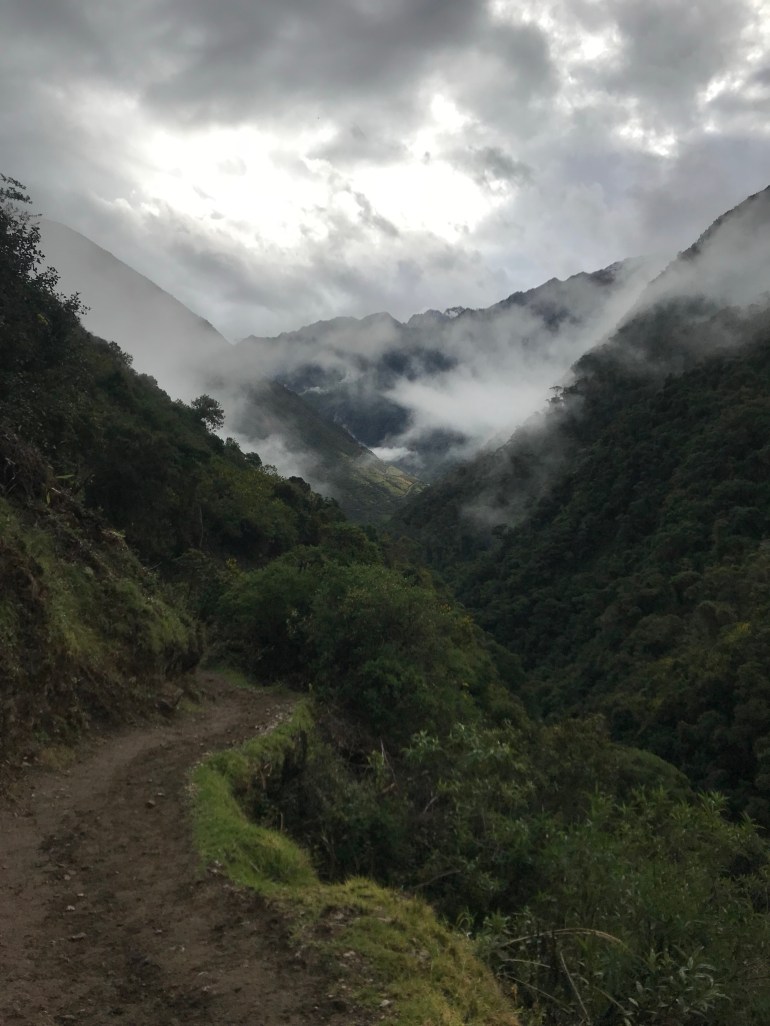
The next couple of days brought jungle scenes and cloud forests! All the pain of the first couple of days was ‘sweat’ away as the climate became more humid. We welcomed the tropical fruits and football games we played on hike breaks, and following a flowing river through the valley was nature’s finest musical accompaniment.
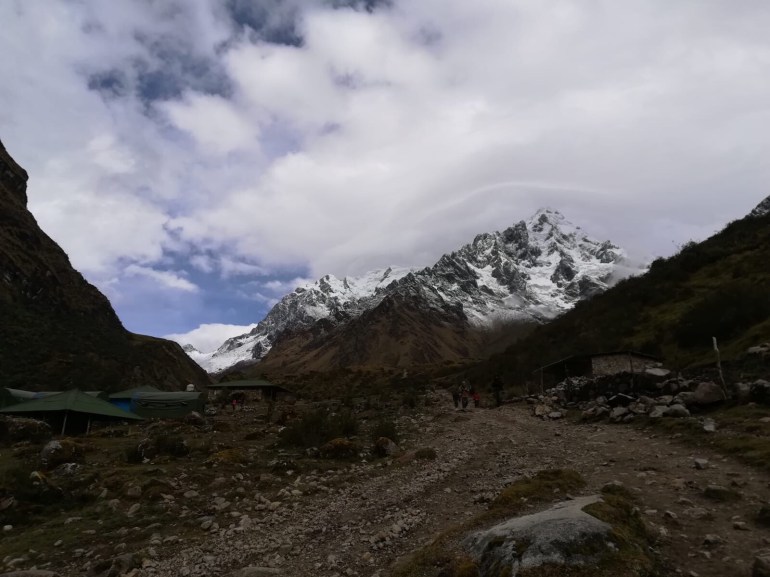 The skies started to clear just as we had gone over the pass and made it down the other side. Great.
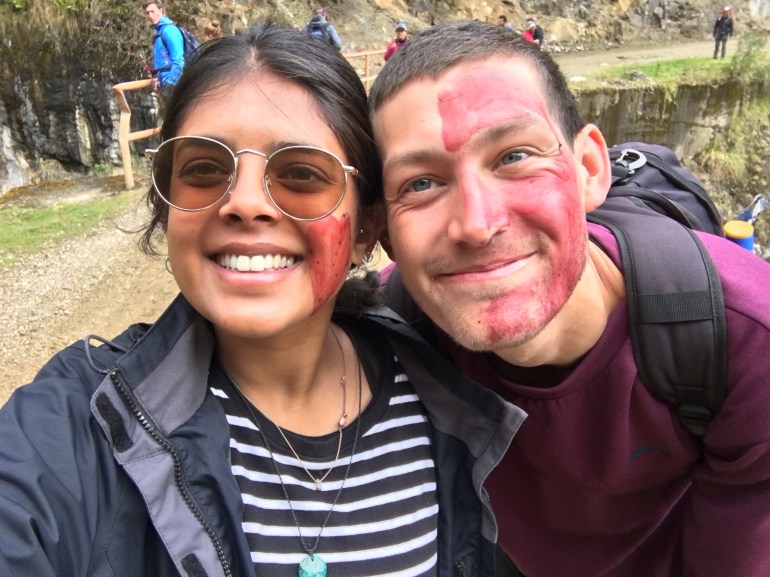 Berries native to the Andean highlands are used as a natural sunscreen and bug repellent *squishes berries and slaps on*
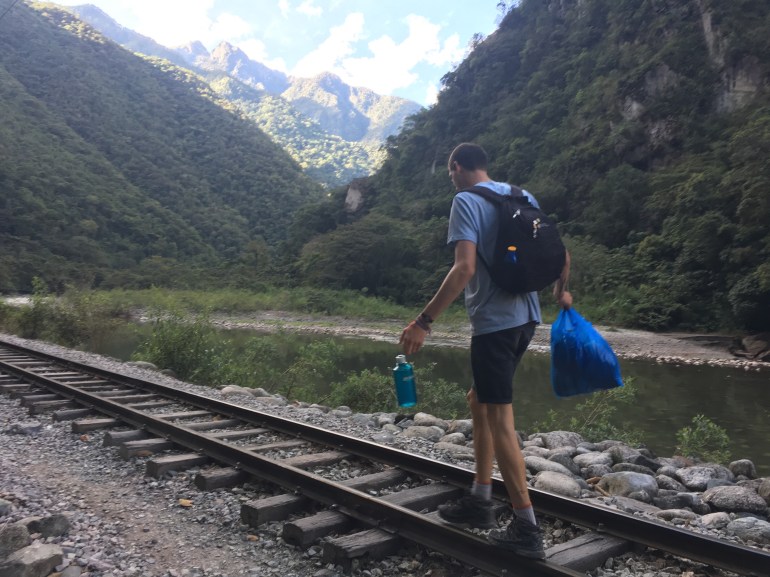
Our last day walking was perhaps the best. The sun came out while we walked along some train tracks at the foot of Machu Pichu mountain. Thankfully the route was flat and we could all taste the end of our intrepid hike. No blood, but definitely sweat and tears were in the air!
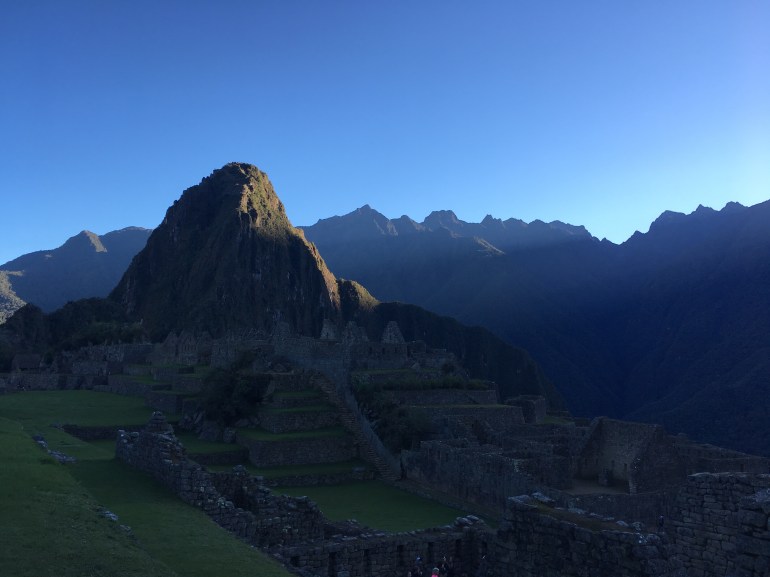
We arrived in the early evening into a town hosting an army of tourists waiting to see the world wonder. Hot showers and a bed never felt so good! On our last early morning wake-up of the hike (although without the coca leaf tea we became accustomed to in the tents), we headed to Machu Picchu at 4am to marvel at the sunrise over the mountain and the ruins before us. This is what all 5 days had been about and it felt so sweet! Neither of us were sure how we would feel given the huge expectations, but as it opened up in front of us we were in awe of the remains of this ancient civilisation.
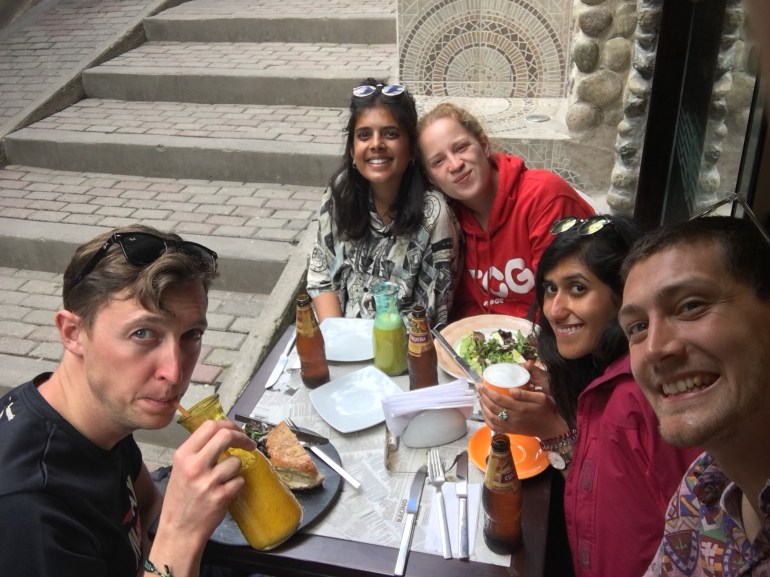
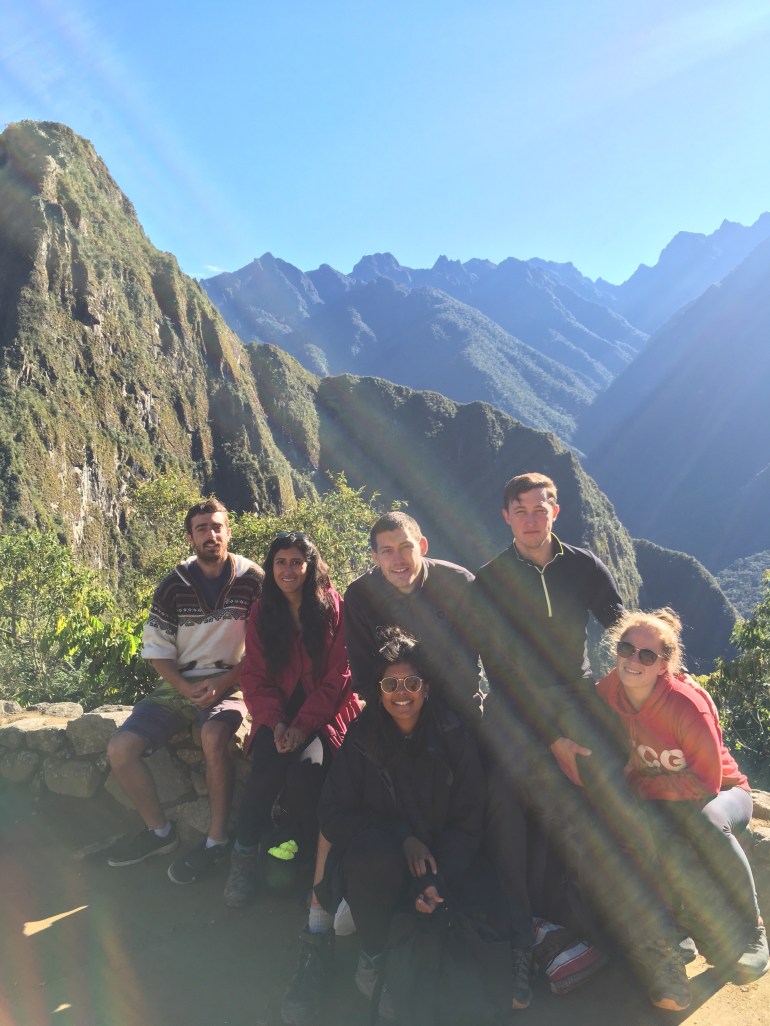 The 5 of us with Aussie Jake we picked up on the way!
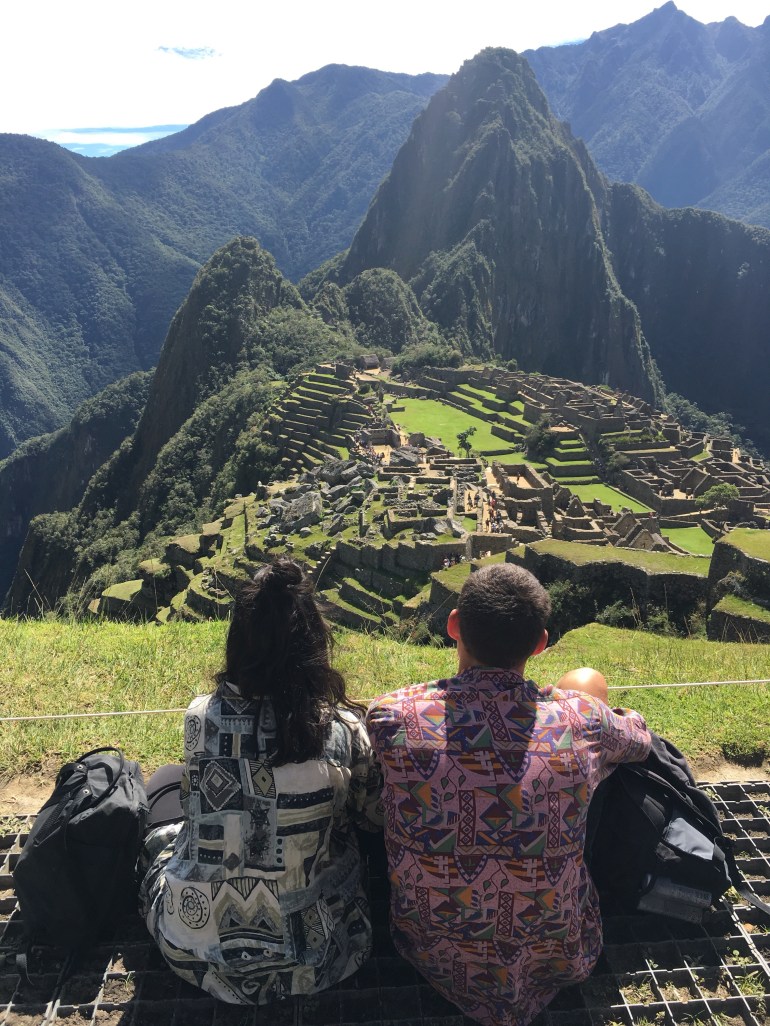
In the afternoon we were slightly dismayed by a policy which meant Jana, Cyril and Jake were not able to re-enter the site with us after lunch. This was purely down to their pick of ticket-man in the queue they had joined. Our discontent grew further when we were told that piggyback pictures were a definite no no. Feeling the need to ‘stick it to the man’, we proceeded to take our ‘dangerous photos’ – although this left us being escorted out of the ruins! If there is a black book, our names are probably in there. Machu Picchu was incredible, breathtaking and exceeded our expectations – a magical, once in a lifetime experience (perhaps not out of choice for us, as we are probably banned from a future visit)! Back down the mountain and with a beer in hand, we cheers’d to adventure and friends who get kicked out with you.
Back in Cusco, rest and recuperation were much needed. We had battled mountains, the cold and strenuous climbs but we had also been tackling altitude for nearly 2 months and were feeling ready to return to sea level. A descent towards the coast was waiting for us and we were dreaming of all that air our lungs had desperately missed. We waved a temporary goodbye to the mountains and turned our attention to Arequipa, our next stop on our adventure!
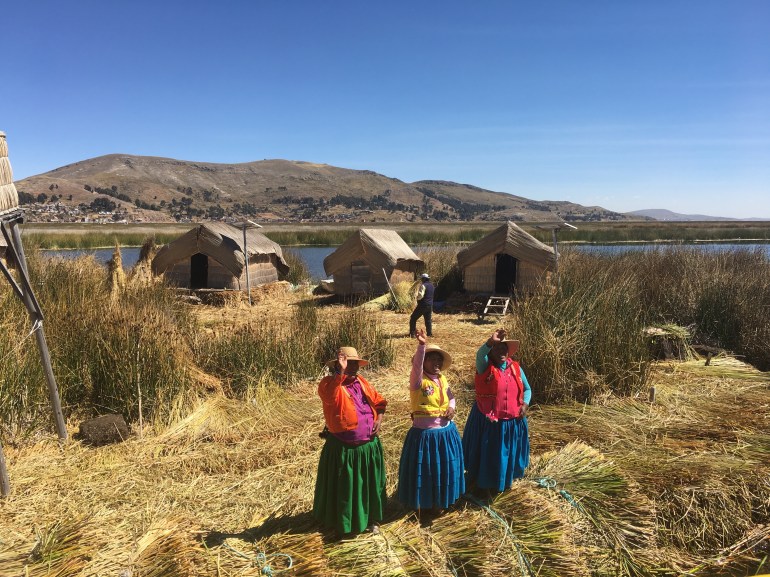
Uros Ladies: Families stay on each of the islands and whether it’s a twist of fate, or the men of Uros often work away in the city, 80% of the islands are ‘managed’ by women. They are in charge of absolutely everything, including the tourism of the islands which brings in most of the familial income. Something about a woman’s touch…
Rainbow realism: The reason our rainbow mountain site was so quiet was because only a few tour operators run this tour, given it was discovered as recently as 2017. In a similar vein to our post about Iguazu, the melting snow caps of the Andes are revealing these beautiful mineral-rich areas of colourful sediments and rock. What Pachamama gives with one hand, she takes with another. Pouring another one out for the old gal, because we only get to appreciate this beauty as a cruel side effect of global warming.
What we’re listening to: Introducing the return of the Uyuni playlist, and this time a song from the playlist makes the cut – Ms Franklin and I Say A Little Prayer. But it was more like a very big prayer, and it was for ourselves.
Love & hugs,
Cal & Rosh xxx
 The Los Vagans